 English
 عربي
 Русский
 Français
 Español
 Deutsch
Experience superior clarity and rugged reliability with the DM-900UV, a 10W dual-band DMR radio featuring IP68 waterproofing and 300-hour voice recording.
Read More


Multi-Department Synergy in Ski Resorts: KANGLONG DM-900UV Digital Two-Way Radio Application Solution
Applicable Scenarios: Ski Slope Patrol | Cable Car & Magic Carpet Maintenance | Snow Grooming & Snowmaking Operations | Emergency Response | Park Closing & Slope Clearing
Daily ski resort operations involve multiple departments working across vast terrains: ski slope patrollers are dispersed across various trails, cable car and magic carpet staff continuously monitor mechanical operations, snow grooming and snowmaking teams operate during early mornings or late nights, and guest service teams respond promptly to skier needs. Due to rugged mountain terrain and widely distributed personnel, on-site teams require an intuitive communication method for rapid calling, coordination, and status reporting.
A ski resort presents challenging operational conditions. Sub-zero temperatures, heavy snowfall, mountain obstructions, and heavy machinery noise impose strict demands on two-way communications. Maintaining seamless connectivity among distributed teams is essential for daily efficiency and guest safety. The KANGLONG DM-900UV digital two-way radio integrates high RF output power, IP68 environmental protection, DMR digital and analog dual-mode operation, and versatile field capabilities to provide dependable communication support for multi-team coordination and resort dispatching.
Snowfall and Thawing Conditions Staff spend extensive hours outdoors where radios encounter continuous snowfall, melting snow, and damp gear. Rugged waterproof and dustproof protection is essential. The DM-900UV features an IP68 ingress protection rating, shielding internal circuitry against heavy snowfall, slush, and high humidity, providing total peace of mind for outdoor crews.
Mountainous Topography and Blind Zones Ski slopes wind across ridges, reverse slopes, dense woodlands, and varying altitudes. Terrain elevations, trees, and base lodge structures naturally attenuate RF signals, meaning coverage cannot be judged solely by transmitter wattage. The DM-900UV delivers up to 10W output power to significantly strengthen signal penetration in open and semi-obstructed areas, streamlining contact between patrol teams and lift operators. For severe blind zones behind ridgelines, strategically placed DMR repeaters can further extend resort-wide coverage.
Simultaneous Multi-Department Operations Patrol, lift operations, snowmaking, grooming, and guest services have distinct communication workflows. If all personnel share a single open channel, frequent voice traffic causes channel congestion. The DM-900UV supports comprehensive multi-channel programming, allowing resort management to allocate dedicated talkgroups for slope patrol, lift maintenance, equipment teams, and general dispatch. Utilizing DMR digital technology, teams can configure Color Codes, Time Slots, and specific Call Groups to achieve independent group calls without mutual radio interference.
High Ambient Noise and Rapid Field Handling Snowcats, snow guns, and lift drive stations generate substantial mechanical noise, while ridge winds degrade voice clarity. Equipping staff with noise-canceling earpieces or remote speaker microphones (RSMs) tested under actual working conditions is highly recommended. For staff wearing thick winter gloves, pre-programming essential channels and intuitive controls minimizes complicated manual adjustments in the cold.
Incident Logging and Post-Operation Review Guest accidents, temporary trail closures, and equipment anomalies require rapid inter-departmental communication. The DM-900UV supports up to 300 hours of voice recording, enabling resort managers to log critical communications during daily dispatch, technical maintenance, and emergency incidents. Recorded audio playback allows supervisors to review incident timelines accurately, supporting operational debriefs, dispute resolution, and team training.
Department / Scenario Communication Configuration Strategy Operational Value
Ski Slope Patrol Establish dedicated patrol talkgroups assigned by slope zones for daily patrols. Immediately report skier injuries or safety hazards with precise locations to dispatch. Maintains direct contact between patrollers and central dispatch to rapidly coordinate nearby support.
Lift & Magic Carpet Maintenance Assign independent talkgroups for each lift station. Notify duty managers and maintenance personnel immediately upon detecting mechanical anomalies. Eliminates communication bottlenecks and ensures swift dissemination of stop, inspection, and restart notices.
Snow Grooming & Snowmaking Set up dedicated machinery channels during night and early morning shifts. Clarify calling protocols for vehicle operators, active zones, and dispatchers. Streamlines heavy machinery coordination and eliminates operational downtime caused by delayed messages.
Emergency Response Reserve an emergency talkgroup with defined call priority linking dispatch, patrollers, medical staff, and key lift stations. Ensures instant transmission of critical incident data to organize rescue operations and crowd control.
Park Closing & Slope Clearing Patrollers provide sectional sweep updates by zone. Dispatch consolidates reports and confirms final closing sequences with lift teams. Provides unified visibility into trail sweep progress and mountain status.
The DM-900UV supports up to 1,024 memory channels, offering ample programming capacity to customize channel plans for different job roles, zones, and communication priorities. Whether coordinating slope patrols, lift maintenance, mechanical work, or master dispatch, a structured channel architecture keeps cross-team communications clear and organized.
Morning: Pre-Opening Safety Inspections Before slopes open to the public, all operational posts check in with the central dispatch center via DM-900UV radios. Grooming and snowmaking crews report slope surface readiness and machinery status; ski patrollers report the condition of trail markers, safety netting, and critical slope sections; lift and magic carpet teams confirm mechanical pre-checks and readiness. The dispatch center synthesizes real-time reports to coordinate staffing and equipment deployment, ensuring a safe and orderly resort opening.
Operating Hours: Grouped Communication and Emergency Dispatch During operational hours, staff communicate within their designated functional talkgroups to update progress and report local conditions without cluttering unrelated channels. When a skier injury, equipment malfunction, or sudden weather change occurs, relevant staff immediately switch to the designated Emergency Response Group to transmit real-time alerts. The dispatch center promptly mobilizes patrollers, medical personnel, and technicians, substantially improving emergency response and rescue efficiency.
After Closing: Slope Clearing and Equipment Handover Patrollers sweep trails zone by zone, reporting completion or pending issues to dispatch. Once closing sweeps are confirmed, the dispatch center coordinates with lift operators to conclude daily operations. Radios are collected, inspected for physical wear, cleaned, and placed on charging racks according to maintenance protocols. If specific incidents require review, relevant voice logs are retrieved following resort administrative guidelines.
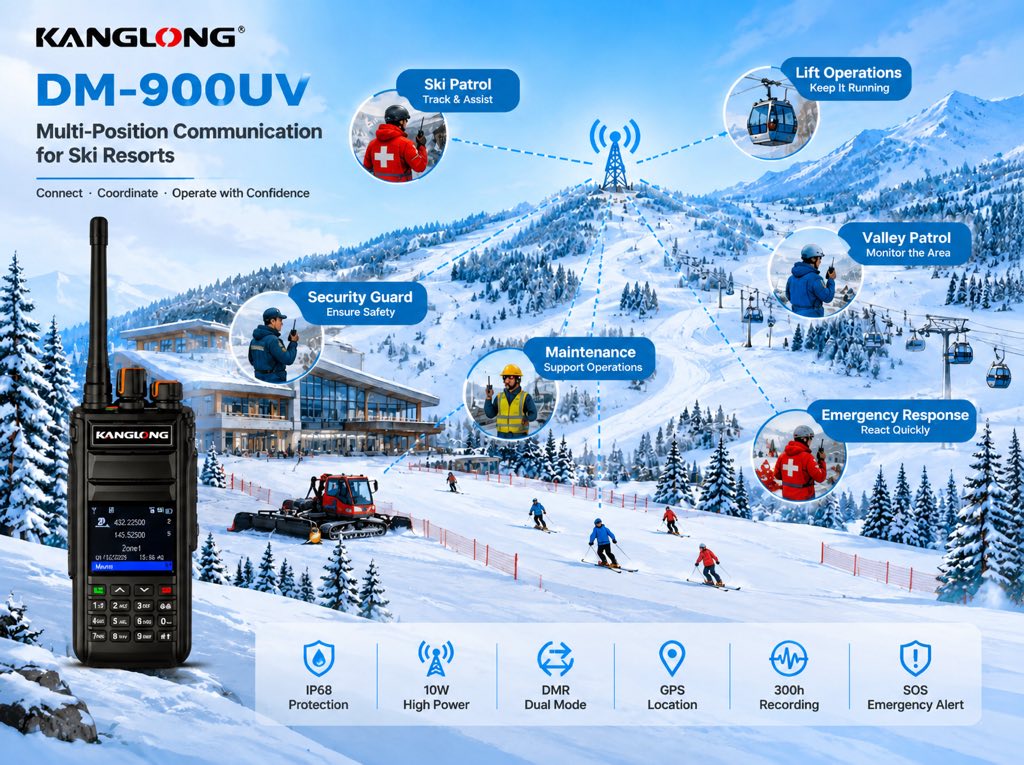
Conduct Comprehensive Field Coverage Testing: Perform two-way communication tests across peaks, valleys, wooded runs, lift stations, rental halls, and sharp slope curves to identify weak signal spots. Evaluate repeater installations and antenna placement where necessary.
Structure Channels by Role and Zone: Adopt a standardized naming format (such as Role + Zone) and maintain uniform radio programming parameters across all units. Clearly define usage rules and access permissions for master dispatch and emergency channels to prevent channel confusion.
Manage Battery Performance in Cold Climates: Freezing temperatures reduce effective battery endurance. Keep spare batteries on hand, check battery levels during shift handovers, and recharge devices in temperature-controlled indoor facilities.
Establish Clear Emergency Protocols: When utilizing the one-touch SOS feature, pre-designate the monitoring console, responsible staff, and step-by-step response procedures. Conduct regular emergency drills to ensure all team members operate features confidently.
Comply with Local Radio Regulatory Standards: Ensure operating frequencies, RF power levels, and signaling parameters conform to regional radio regulatory authorities. Verify frequency alignment, CTCSS/DCS analog tones, or digital Color Code parameters when interoperating with existing radio fleets.
Q: What is the communication range of the DM-900UV in a ski resort? A: Real-world communication distance depends on mountain topography, antenna height, building structures, and forest density, and cannot be defined as a static figure solely based on 10W RF power. Conducting on-site RF testing along key trails and working posts is strongly advised.
Q: Can existing analog two-way radios communicate with the DM-900UV? A: Yes. The DM-900UV supports digital and analog dual-mode operation. In analog mode, it can communicate seamlessly with existing analog radios provided frequencies and CTCSS/DCS sub-tone parameters match.
Q: Does the GPS feature show all staff locations in real time? A: The device includes built-in GPS positioning capabilities. However, live map tracking, route history, and console visualization require compatible dispatch software, network transmission, and system integration. Having a GPS-enabled terminal is the hardware foundation, but complete dispatch tracking requires backend software deployment.
Q: Does IP68 rating mean the radio can be submerged in melting snow indefinitely? A: Ingress protection ratings reflect certified lab test conditions. While IP68 provides robust protection against heavy snow and moisture during daily work, intentional submersion should be avoided, and accessory port covers should remain securely sealed.
Q: How long can the voice recording feature store audio? A: The device supports up to 300 hours of recording capacity. Actual recording duration depends on recording quality settings and memory utilization. Regularly archiving and exporting audio files is recommended.
Q: Does a large ski resort require a radio repeater? A: The need for a repeater depends on resort acreage, terrain complexity, and field test results. If persistent coverage dead spots exist behind mountain ridges, deploying a DMR repeater is the most effective solution.
Q: Can channels be pre-programmed before delivery? A: Custom frequency programming and channel configuration can be completed prior to shipment based on project specifications, regional regulations, and specific fleet requirements.
Effective ski resort communication is not merely about choosing high-power hardware; it relies on establishing structured, intuitive communication protocols tailored to the terrain and staff workflows. The KANGLONG DM-900UV provides digital and analog compatibility, multi-channel flexibility, IP68 ruggedness, GPS, SOS emergency alerting, and voice recording, serving as a reliable communication terminal for resort teams. Through methodical channel planning, thorough field testing, and disciplined fleet management, ski resorts can maintain seamless inter-departmental synergy and robust emergency readiness.
KANGLONG specializes in the research, development, and manufacturing of professional wireless communication equipment, providing reliable two-way radios and OEM/ODM customization services for enterprise clients worldwide.
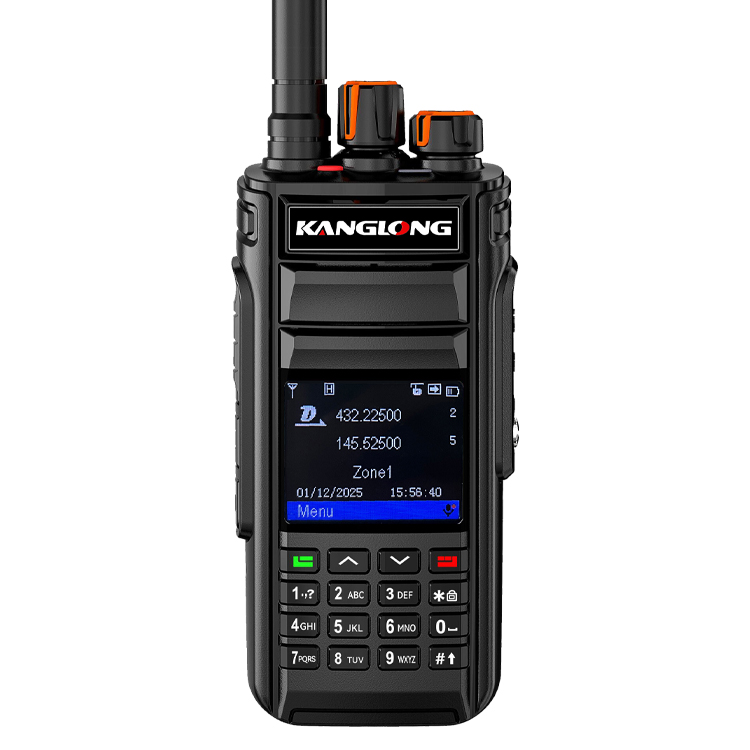
Experience superior clarity and rugged reliability with the DM-900UV, a 10W dual-band DMR radio featuring IP68 waterproofing and 300-hour voice recording.
Read More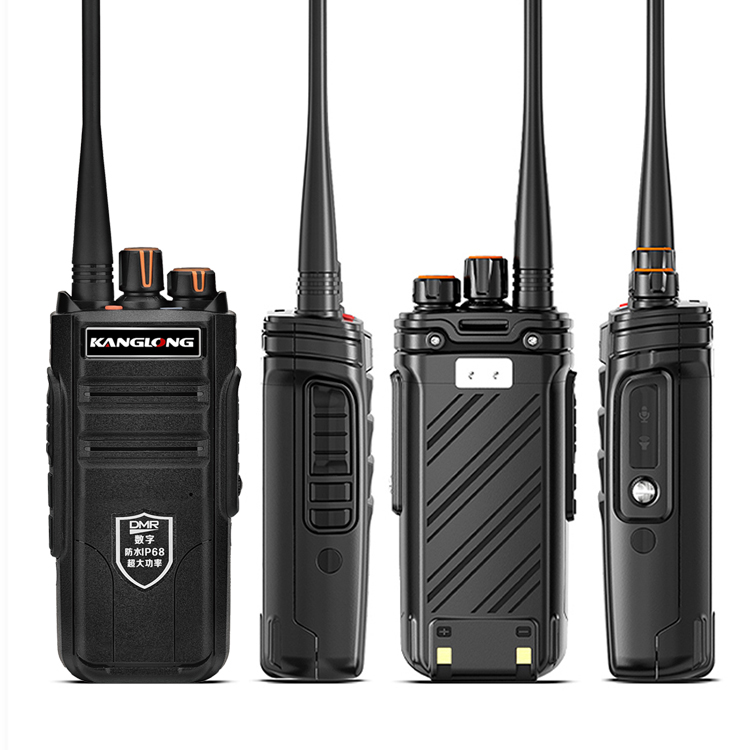
The KANGLONG DM-800 is a professional two-way radio featuring AES256 DMR encryption, 10W walkie talkie power, and same frequency relay radio technology in a rugged IP68 waterproof radio body.
Read More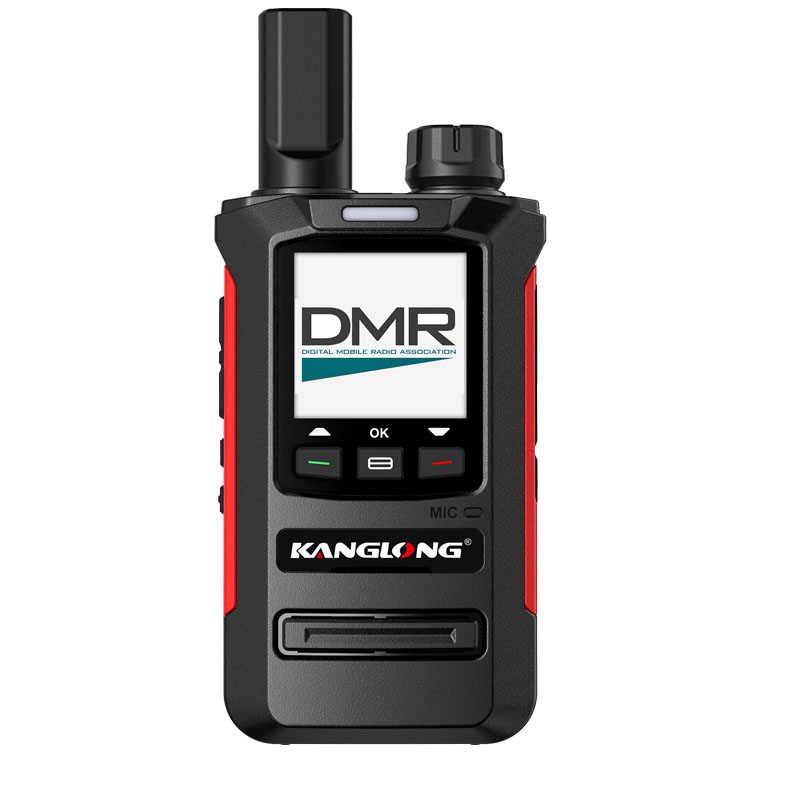
Ultra-compact and secure, the KANGLONG DM-390 combines professional AES256 digital encryption with a stylish 1.44" color display and Type-C charging, making it the ultimate high-performance communication tool for modern service and outdoor environments.
Read More
The KANGLONG DM-300 is a ultra-compact 2W DMR digital radio featuring AES256 encryption, Type-C charging, and high-performance communication for modern service environments.
Read More