How D750 LoRa Mesh Keeps Construction Crews Connected
1. Start With a Very Specific Problem: How Does a Construction Crew Stay Connected With No Cell Signal?
On mountain road projects, tunnel works, or remote job sites, communications break down not because workers lack phones, but because the site simply has no reliable cellular network.
Once crews move into valleys, behind a hillside, or far from any base station, their phones can drop straight to “No Service.” Conventional two-way radios don't depend on cellular networks, but as the work area expands and personnel and vehicles keep moving, a single handheld radio's coverage develops dead zones.
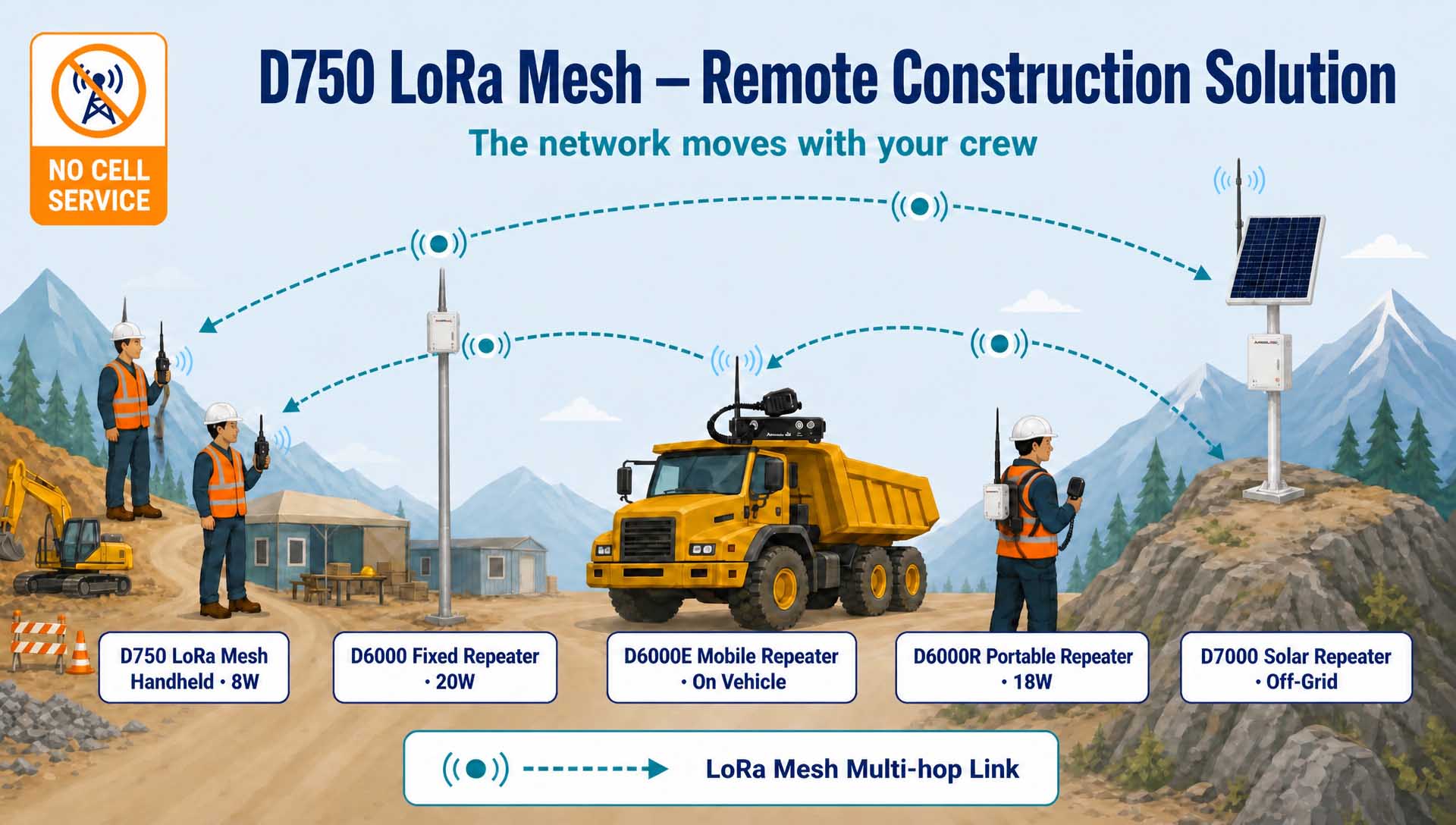
When building fixed communication towers isn't an option, and the network needs to move with the work area, a more practical approach is: use D750 LoRa Mesh handheld radios as the field communication terminals, then add mobile repeaters and fixed mesh nodes according to the site footprint, linking the scattered communication points into a wireless network with multi-hop capability.
2. Why Do Conventional Radios Develop Dead Zones on Mountain Construction Sites?
Conventional radios communicate by establishing a direct wireless link between devices.
When two workers are close together with no major obstruction between them, communication is usually straightforward. But on a mountain construction site, the radio environment is rarely that ideal. Ridges, curves, valleys, vegetation, structures, and constantly shifting distances between personnel all affect link performance.
More importantly, a construction site is not a fixed office. Today the crew may be concentrated at the foot of the mountain; tomorrow they push toward the summit. Machinery and vehicles keep moving. A single fixed node often can't cover the whole job from start to finish, and simply swapping in higher-power handhelds won't solve every terrain-driven coverage problem either.
3. D750: Every Crew Member Becomes Part of the Mesh Network
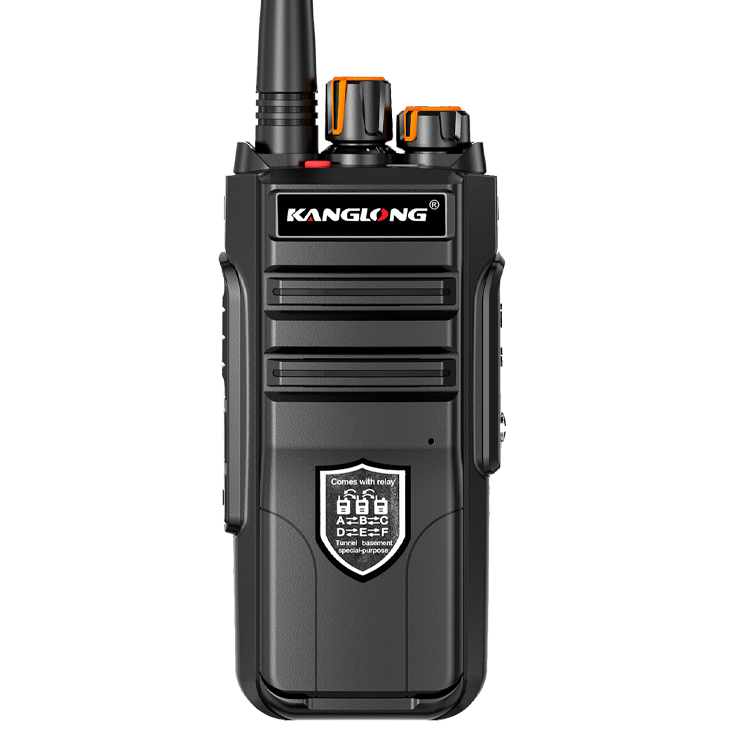
In this solution, the D750 is not just an ordinary handheld radio — it is a mobile communication terminal in the LoRa Mesh network.
Site supervisors, maintenance technicians, equipment operators, and vehicle drivers can each carry a D750 according to their role. When the work area is small, the D750s can form a standalone site mesh network directly; as the footprint grows, compatible nodes such as the D6000, D6000E, D6000R, or D7000 extend the network further.
The D750 uses an 8W high-power design and supports LoRa Ad-Hoc Mesh communication. Unlike approaches that rely on single-point direct links, a mesh network lets compatible devices participate in traffic transport. When a worker cannot establish a reliable direct link with the target, traffic can be forwarded through other network nodes — extending coverage from “the reach of one radio” to “a network made of many nodes.”
4. How Do Eight D750s Form a Working Construction Communication Network?
Say a mountain road project has 8 core crew members: one site supervisor, two engineering technicians, two equipment operators, two maintenance technicians, and one vehicle driver. Each one gets a D750. The baseline configuration looks like this:
· 8 × D750 LoRa Mesh handheld radios
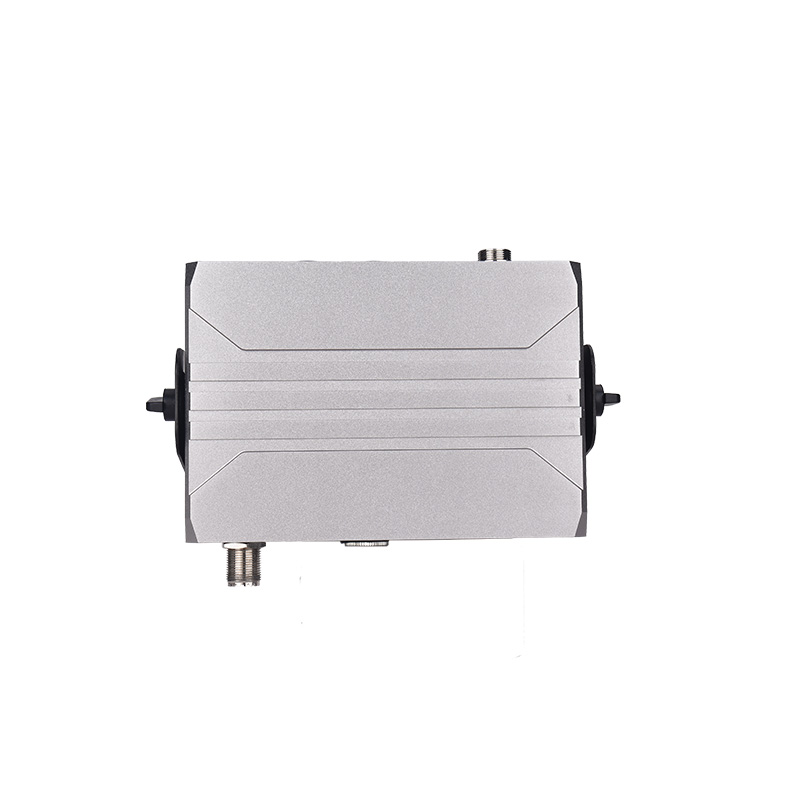
· 1 × D6000E vehicle-mounted LoRa repeater, installed on an engineering vehicle
· D6000 fixed repeaters or D7000 solar repeaters, added based on terrain and coverage requirements
· D6000R portable repeater kit for rapid, mobile deployment
· Additional fixed mesh / solar repeater nodes based on terrain and coverage requirements
When the work area is small, the eight D750s form the site communication network directly over LoRa Mesh. As operations push into farther valleys or across the other side of a ridge, mobile repeaters or additional mesh nodes expand the network.
5. Mount the Repeater on an Engineering Vehicle: The Network Moves With the Crew
This is what sets this solution apart from fixed communication systems. When the work site changes every day, installing a compatible LoRa repeater — the D6000E — on an engineering vehicle turns that vehicle into a mobile communication node.
For example, when crews are spread across different work points and the vehicle is positioned on relatively open or elevated ground, the mobile repeater on board helps D750s in different zones stay connected. As the work front advances, the vehicle and its repeater move with it. The network no longer depends on fixed-position infrastructure; it can be reconfigured as construction progresses.
6. One Repeater Isn't Enough? Let LoRa Signals Keep Hopping
If the work area expands further, a single D6000E may still not cover everything. In that case, add D6000 fixed repeaters, D6000R portable repeaters, or D7000 solar repeaters according to site conditions, so traffic relays stage by stage through multiple compatible nodes. For example:
· D750 → Mobile Repeater → D6000R Portable Repeater → D750
· Or on a more complex site: D750 → Node 1 → Node 2 → Node 3 → Site Command
The value of multi-hop is not simply “amplifying a signal.” It lets multiple compatible nodes combine into an extensible communication network. For projects with long linear layouts, complex terrain, and ever-shifting work areas, this architecture is far more flexible than relying on a single fixed communication point.
7. No Mains Power? Add Solar-Powered LoRa Repeaters
Mountain construction has another common problem: the best places to put a repeater are often the hardest places to get power. Hilltops, road bends, remote work points, and temporary work zones may have no stable mains supply.
In these cases, deploy solar-powered LoRa repeater nodes (fixed D6000 repeaters, portable D6000R repeaters) as the project requires, keeping remote nodes in the mesh network long-term. A more complete deployment therefore looks like this: 8 × D750 handheld radios + 1 × mobile repeater (D6000R, or the D6000E vehicle-mounted repeater) + 1 × D7000 solar-powered fixed repeater. Crew members use their D750s for day-to-day communication; the D6000E vehicle repeater moves with the crew; the solar repeater provides a permanent network node at a critical location. Together, the three layers form a more stable on-site LoRa Mesh network.
8. What Kind of Construction Projects Does This Solution Fit?
It fits projects that combine two characteristics: “no reliable cellular network” and “a work area that keeps changing.” For example:
· Mountain road and highway construction
· Infrastructure development in remote areas
· Tunnel and tunnel-mouth construction
· Hydropower and energy projects
· Large-scale outdoor engineering projects
· Temporary road and bridge construction
· Post-disaster road repair and emergency works
If the site already has stable 4G/5G coverage, PoC communication is a valid alternative. But for true cellular dead zones, a standalone LoRa Mesh network offers a different communication approach.
9. How to Plan a D750 LoRa Mesh Network
Don't start with how many devices you need — start with the site itself.
First, look at how large the work area is and where personnel are concentrated.
Second, look at terrain factors that affect radio propagation: valleys, hillsides, tunnels, structures.
Third, look at the vehicle routes and whether a mobile repeater can be mounted on a vehicle.
Fourth, identify suitable locations for fixed mesh nodes. Fifth, decide the number of D750s, mobile repeaters, and fixed/solar nodes based on actual coverage requirements. Real-world range is affected by terrain, antenna position, mounting height, environment, and equipment configuration, so the final deployment should be tuned by on-site testing — not judged by theoretical distance figures alone.
10. Why D750 + Mobile Repeater + Mesh Node Is the More Practical Combination
For a construction site that is constantly changing, this combination solves three distinct problems:
D750 — solves “how people communicate.” Every crew member carries a LoRa Mesh handheld radio for day-to-day voice communication.
Mobile Repeater — solves “how the nodes move.” The D6000E is mounted on an engineering vehicle so the network can move with the work area; when personnel need to relocate a communication node quickly, the D6000R portable repeater kit is the answer.
Fixed/Solar Mesh Node — solves “how remote areas stay covered.” Fixed nodes on high ground, hilltops, or off-grid areas push the network further out.
What you end up with is not a simple “radio plus signal booster.” It is a LoRa Mesh communication network that can be adjusted as the construction site changes.
11. A Deployable Project Configuration Example
Take a mountain road construction project: 8 core crew members handling site management, equipment operation, maintenance, and vehicle dispatch. Each one is equipped with a D750; one D6000E mobile LoRa repeater is mounted on the engineering vehicle; one D7000 solar-powered LoRa repeater is deployed at a remote, elevated location with no mains power. Daily communication paths route automatically through compatible nodes based on the live network state.
As the crew moves forward, the vehicle repeater moves with them; when a new work area exceeds current coverage, add mesh nodes — no need to rebuild a complete communication infrastructure. For teams that must keep working in mountains with no cell service, the core value is clear: make the network adapt to the construction site, rather than forcing the site to adapt to fixed infrastructure.
12. How Do the Kanglong LoRa Repeaters Divide the Work?
To make the solution easy to combine for any site condition, the repeater lineup covers different roles:
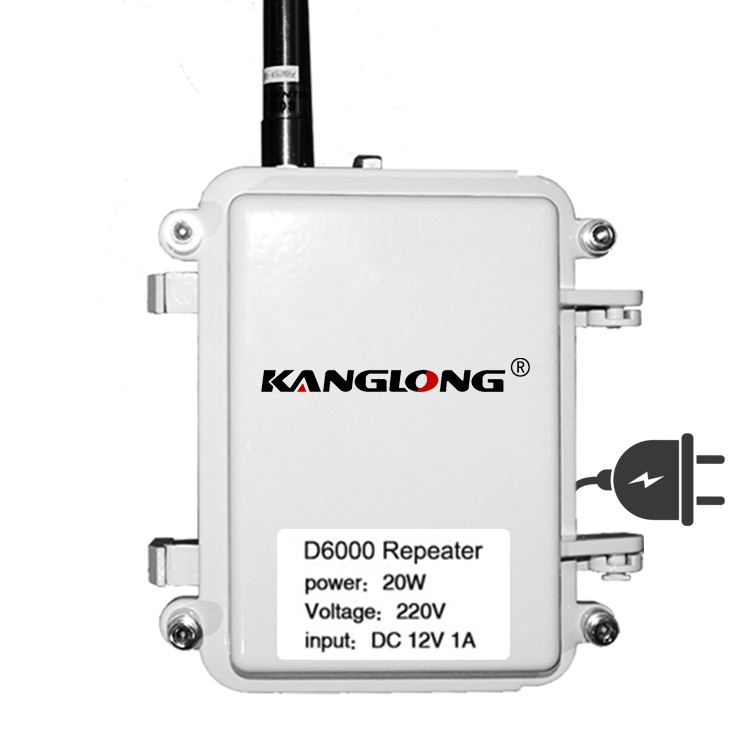
D6000 fixed repeater: for permanent communication positions — construction camps, high points on slopes, along roadways, or any location that needs continuous mesh coverage.
D6000E vehicle-mounted repeater: mounts on engineering vehicles, moves with the crew, and provides a mobile communication node for dynamic work areas.
D6000R portable repeater kit: built-in 10,000 mAh battery, speaker microphone, foldable antenna, and backpack — for temporary communication points with no fixed mounting, carried by personnel or relocated quickly.
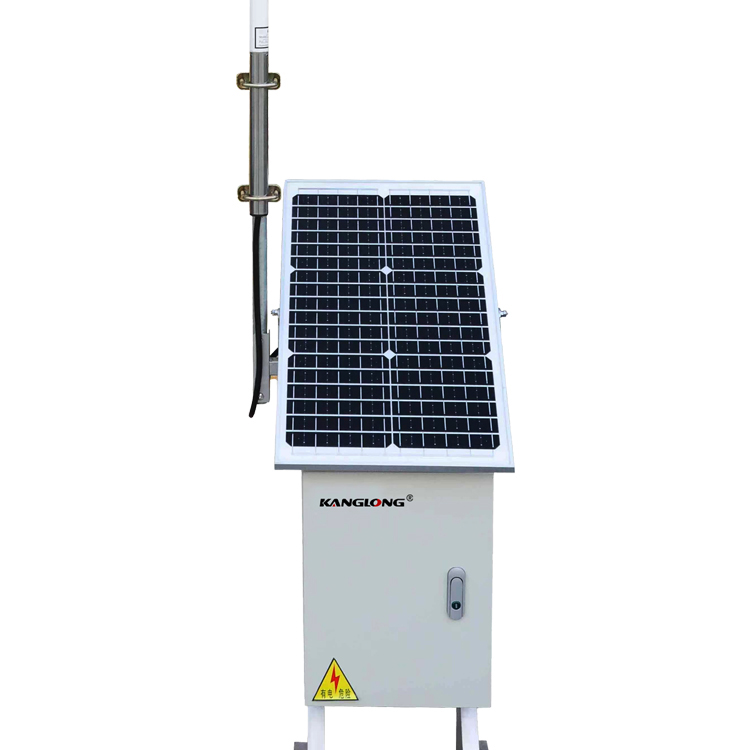
D7000 solar repeater: for remote off-grid locations; solar-powered, providing a long-term fixed mesh node on high ground, hilltops, or far-flung areas.
These four repeaters don't replace one another. They combine across the site's “fixed points, mobile points, temporary points, and off-grid points.”
FAQ
1. Can the D750 work where there is no cell signal?
Yes. The D750's LoRa Mesh communication does not depend on 4G/5G cellular networks, making it suitable for field communication where cellular coverage is unreliable.
2. What does “D750 LoRa radio” mean?
The D750 belongs to the Kanglong LoRa Ad-Hoc Mesh ecosystem and operates as a handheld communication terminal in compatible mesh networks.
3. Do eight D750s always need a repeater?
Not necessarily. Whether a repeater is needed depends on the size of the work area, terrain, personnel distribution, and actual coverage requirements. A repeater's role is to further expand or extend network coverage.
4. Why mount the mobile repeater on an engineering vehicle?
Because the work area keeps moving. Deploying a compatible repeater on a vehicle lets the communication node move with the crew and the vehicles — ideal for temporary or dynamic construction sites.
5. Does LoRa Mesh support multi-hop?
Yes. Compatible Kanglong LoRa Mesh devices can relay signals across multiple nodes. The exact hop capability and real-world coverage depend on device configuration and site conditions.
6. What if there is no power on the hilltop?
Consider a solar-powered LoRa repeater based on project requirements to provide a fixed mesh node at remote locations.
7. Can the D750 communicate directly with DMR or analog radios?
No. Kanglong LoRa is a standalone LoRa Mesh communication ecosystem. It cannot interoperate directly with DMR or analog systems, and mixing different systems in one network is not recommended.
8. What is the D750's actual communication range?
There is no single fixed number. Mountain terrain, ridge shadowing, antenna position, mounting height, and the number of nodes all affect performance. On-site testing and network planning for each specific project are recommended.
9. Is this solution suitable for short-term projects?
Yes. Mobile repeaters and mesh nodes can be adjusted as the work area changes, making the solution especially suitable for temporary works, road construction, remote-area projects, and emergency repairs.
10. How do I determine how many D750s and repeater nodes I need?
Plan based on the site area, personnel count, vehicle routes, terrain, communication dead zones, and whether fixed remote coverage is required. Kanglong can help design the LoRa Mesh network further based on your project site information.
Note: Actual LoRa Mesh network coverage is affected by local radio regulations, frequency bands, terrain, antennas, mounting height, environment, and equipment configuration. Final configurations for a specific project should be determined according to the regulatory requirements of the target market and on-site test results.
 English
 عربي
عربي Русский
 Français
 Español
 Deutsch