 English
 عربي
عربي Русский
 Français
 Español
 Deutsch
Experience superior clarity and rugged reliability with the DM-900UV, a 10W dual-band DMR radio featuring IP68 waterproofing and 300-hour voice recording.
Read More

Stadium Blackouts? Mastering 2026 World Cup Wireless Communications
What happens when a critical security alert needs to clear a crowded stadium gateway, but your team's communication devices are showing nothing but a spinning wheel or dead static? In massive sports infrastructure, the answer is usually immediate chaos. Imagine a scenario inside one of the signature venues of the upcoming 2026 World Cup—like the iconic Estadio Azteca in Mexico City with its 83,000 capacity, or the cavernous AT&T Stadium in Dallas holding up to 94,000 screaming fans. The whistle blows, the crowd roars, and suddenly, thousands of smartphones dump massive loads of high-definition video onto the local commercial cellular towers. Within seconds, public 4G and 5G networks collapse under the sheer weight of data congestion. If your logistics, medical, and security teams are relying on standard cell phones or low-grade consumer radios, they are completely cut off from each other. This is exactly where a professional, standalone wireless setup becomes a life-saving asset rather than a luxury. By deploying a robust, high-performance kanglong walkie talkie network, event operators gain absolute command over their operational environment, ensuring zero-latency voice transmission when every second counts.
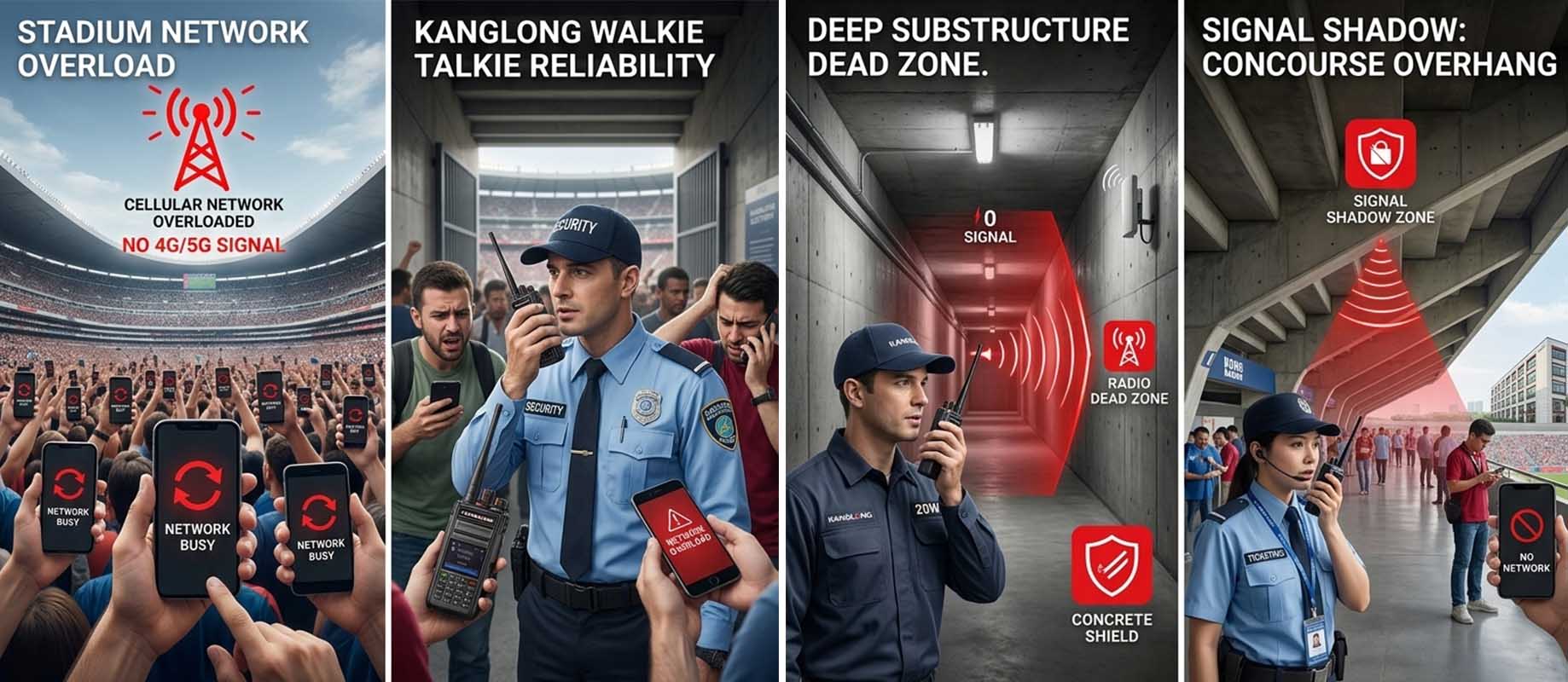
Large-scale sporting events present a perfect storm of RF (Radio Frequency) challenges. Traditional communication lines break down due to three unyielding forces: extreme acoustic noise that overpowers standard microphones, dense electromagnetic interference from thousands of consumer electronics, and complex building structures that act as shields against radio waves. To manage an event across three nations—the US Canada Mexico—organizers cannot afford to guess where their signals will drop. They need a system designed from the ground up to push through concrete, bypass spectrum noise, and operate flawlessly for hours on end without a single point of failure.
From an RF engineering perspective, a stadium is not just an open field; it is a sprawling, high-density fortress built out of heavily reinforced concrete, thick structural steel, and mirrored composite glass. These specific materials are highly efficient at scattering and absorbing radio signals, turning vital back-of-house areas into complete communication dead zones. When we run site surveys for major sporting installations, we consistently find serious signal loss in three primary areas:
Deep Underground and Below-Grade Substructures
Locker rooms, player tunnels, press conference areas, and referee rooms are almost always buried deep within the core of the stadium, surrounded by meters of thick concrete and earth. A standard 5-watt walkie-talkie transmitting from the pitch level will rarely penetrate down to these sub-levels. When teams are transitioning players or handling VIP security escorts through these lower corridors, a total blackout means logistics managers lose track of personnel right when coordination needs to be absolute tight.
Enclosed Concourses and Multi-Tier Seating Overhangs
The main seating bowl of modern stadiums features massive concrete and steel cantilevers designed to support upper decks and luxury suites. These overhangs create severe shadowing effects. A signal moving from the outer perimeter gate cannot reach the inner lower concourse because it is blocked by multiple layers of structural tiers. Concession staff, ticketing inspectors, and aisle marshals working under these decks are frequently isolated from the main command center.
Vast External Perimeters and Transit Hubs
The operational footprint of a tournament as massive as the 2026 FIFA World Cup does not stop at the stadium gates. It stretches miles out into auxiliary parking fields, temporary fan zones, bus terminals, and security checkpoints. Maintaining a clear line of communication over an area spanning 5 to 10 kilometers is a massive challenge, particularly when local geography or neighboring skyscrapers disrupt line-of-sight propagation. Relying on traditional point-to-point analog handhelds over these distances will result in heavy static and unreadable audio.
"A successful wireless solution for elite sports events must eliminate these dead zones by combining high raw power, advanced digital error correction, and independent multi-hop relay systems that require zero existing building infrastructure."

To solve these layout challenges effectively, a professional radio deployment must utilize a tiered engineering approach. We do not just hand out the same radio model to everyone and hope for the best. Different teams require specific toolsets depending on where they are positioned and how critical their traffic is. Our blueprint splits the stadium ecosystem into three distinct technology layers: Digital Mobile Radio (DMR), Ultra-High Power Analog, and LoRa Multi-Hop Mesh Networks.
| Operational Zone | RF Challenge | Technology Choice |
Recommended KangLong Model |
|
Command, Security & Medical |
High density, crowded spectrum, audio clarity requirements |
DMR Tier II Digital (UHF) |
KangLong DM-900UV / DM-800 |
|
Underground Corridors & Loading Bunkers |
Heavy concrete absorption, structural shielding |
20W Ultra-High Power Analog (UHF) |
KangLong T-930 |
|
Outer Perimeters, Parking & Shuttles |
Extreme distance (up to 40KM), lack of power outlets |
LoRa Auto-Mesh Relay System |
KangLong D-7000 / D-600 Series |
Why do we emphasize UHF (Ultra High Frequency, 400–470 MHz) for the stadium bowl? Simple physics. While VHF (Very High Frequency) signals excel in open, flat rural areas because they can follow the curvature of the earth over long distances, they have longer wavelengths that struggle to pass through tight building openings. UHF signals have shorter wavelengths that bounce off metallic surfaces and slip through doorways, windows, and structural seams much more effectively, making them the industry standard for complex indoor and arena environments.
Let's look at exactly how we configure the hardware from the two-way radio manufacturer, KangLong Electron. Tech. Co., Ltd., to build a bulletproof communications grid for a high-tier sports match.
The Backbone for Security and Command: KangLong DM-900UV & DM-800 DMR Digital Radios
For the core management staff, security coordinators, and emergency medical teams, we deploy the KangLong DM-900UV and DM-800 digital walkie-talkies. Operating on DMR Tier I & II standards, these devices provide two critical advantages: TDMA (Time Division Multiple Access) dual-slot efficiency and digital audio clarity.
TDMA allows us to split a single 12.5 kHz radio channel into two completely independent talk paths. This effectively doubles the channel capacity of our licensed spectrum without requiring additional frequencies—a massive benefit when coordinating multiple distinct groups like VIP protection, gate security, and medical staff. Furthermore, these digital models utilize advanced vocoders that actively filter out the ambient drone of a 130 dB crowd roar, ensuring that when an officer whispers into their earpiece, the command center hears clear, isolated human voice instead of stadium noise.
Crucially, the DM-900UV features a built-in 300-hour voice recording capability. In high-liability settings like international soccer tournaments, having an unalterable audio log of all security calls is indispensable for post-event analysis and legal compliance. Combined with robust IP68 dust and water protection, these radios can withstand heavy rain during outdoor field operations without failing.
Blasting Through Concrete: The KangLong T-930 20W Ultra-High Power Handheld
When dealing with the absolute worst structural barriers—such as the deep maintenance basements, mechanical vaults, and solid concrete loading docks found in venues across the US Canada Mexico—standard 5-watt handheld radios simply run out of steam. For these specific areas, we equip facilities engineering, heavy logistics, and basement cleaning crews with the heavy-duty KangLong T-930.
The T-930 is an analog beast pushing an unprecedented 20 watts of RF output power. Where a standard
radio's signal attenuates and dies after passing through three or four walls of dense masonry, the T-930's massive 20W output forces the signal through structural dead zones, creating a direct line of communication from the lowest sub-basement straight up to the open-air press box on the roof. It features a convenient USB Type-C charging port, allowing personnel to easily top up their large-capacity batteries using standard vehicle chargers or power banks during extended, back-to-back match days.
Vast Area Tracking Without Infrastructure: KangLong D-7000 & D-600 LoRa Mesh
Solution
The outer perimeter—encompassing park-and-ride shuttle lanes, remote traffic checkpoints, and external fan festivals—presents a completely different problem: extreme distance coupled with a lack of permanent power infrastructure. Setting up traditional repeater towers for temporary use over a two-week event window is incredibly expensive and logistically slow.
Our solution is to deploy the KangLong D-7000 LoRa Repeater alongside the D-600 series auto-mesh mobile units. The D-7000 is a game-changer for wide-area event management. It is a completely self-contained, maintenance-free repeater unit equipped with an integrated solar panel and a high-capacity 20Ah internal battery, all enclosed in a rugged IP55 weatherproof housing. Utilizing long-range LoRa modulation, these units don't need line-of-sight or heavy permanent masts. Instead, they feature an intelligent, ad-hoc multi-hop mesh routing protocol supporting more than 30 sequential hops.
By placing a few D-7000 units on temporary lighting poles or perimeter fences around the venue, the radios automatically discover each other and form a self-healing digital network grid. A signal from a parking warden's radio 15 kilometers away hops from one D-7000 to the next, circumventing geographic obstacles and reaching the central command dashboard with ease. It operates entirely independently of any public cellular infrastructure, providing an unjammable communication ring for peripheral logistics teams.
As experienced radio professionals, we know that great hardware is only half the battle; proper on-site execution is what guarantees a zero-failure event. When setting up a massive sports tournament venue, our deployment team follows a strict, systematic field protocol:
1. Pre-Event Spectrum Sweep: Twenty-four hours before gates open, our engineers use portable spectrum analyzers to scan the entire venue area. We identify existing localized interference from broadcast television trucks, stadium Wi-Fi routers, and local emergency frequencies. We then program our kanglong walkie talkie fleet onto clear, coordinated channels with custom CTCSS/DCS signaling tones to block out external cross-talk.
2. Channel Segmentation and Grouping: We divide the staff into logical talkgroups based on operational priority. Security commands run on a dedicated primary digital slot. Medical dispatch receives a high-priority channel with SOS override enabled. General logistics, cleaning, and concessions are allocated separate analog or digital slots to keep operational chatter from cluttering up vital emergency channels.
3. Strategic Repeater Node Placement: We position the solar-powered D-7000 nodes at high, unobstructed vantage points along the stadium's outer ring. This creates an invisible electronic umbrella covering the entire multi-kilometer perimeter zone, ensuring that any external unit is always within range of at least two mesh nodes.
When the eyes of the world are watching a premier event like the 2026 World Cup, there is absolutely no room for error. A breakdown in communications doesn't just mean delayed hot dog deliveries—it can mean delayed medical responses, compromised security gates, and severe operational gridlock. Relying on commercial mobile networks in a hyper-dense environment is a high-risk gamble that seasoned event managers simply will not take.
By investing in a dedicated wireless layout from a proven, expert two-way radio manufacturer like KangLong, you are buying ultimate control and absolute peace of mind. Whether you need the crystal-clear voice isolation and audit logs of the digital DM-900UV, the raw concrete-shattering power of the 20W T-930, or the rapid-deployment, wide-area coverage of the D-7000 LoRa Mesh Repeater, KangLong provides the exact professional tools required to keep your team connected, your venue secure, and your operations running like clockwork. Don't wait for the stadium lights to go up and the phone networks to go down—secure your wireless foundation today.
About KANGLONG ELECTRON. TECH. CO., LTD.
Located in the global radio communication hub of Quanzhou, China, KangLong has spent over 20 years pioneering high-performance R&D and manufacturing for professional two-way radio equipment. Backed by advanced SMT lines and comprehensive ISO 9001 quality management, KangLong delivers world-class OEM/ODM wireless solutions to partners in over 30 countries across the security, logistics, and heavy construction industries.
Web: www.kanglongradio.com | Professional Two-Way Radio Manufacturer
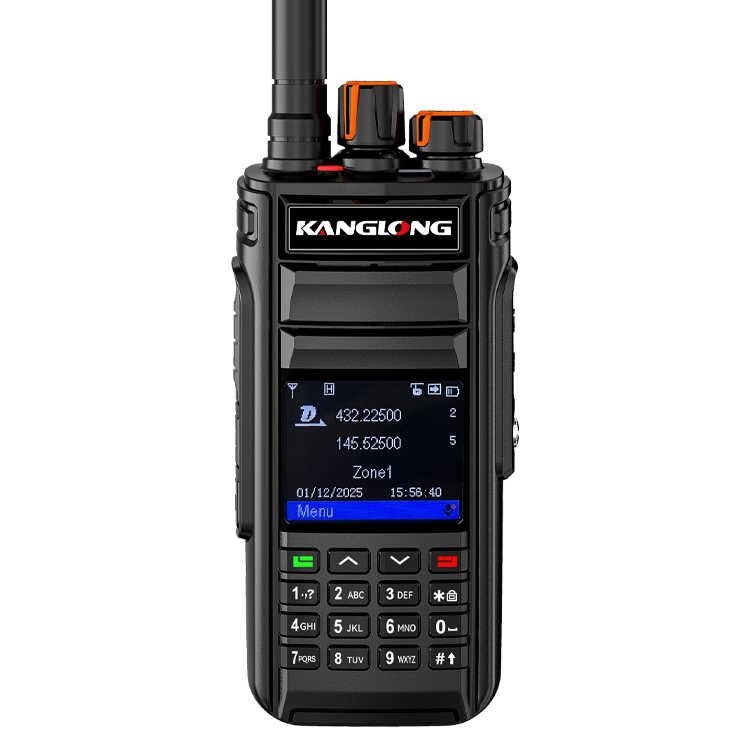
Experience superior clarity and rugged reliability with the DM-900UV, a 10W dual-band DMR radio featuring IP68 waterproofing and 300-hour voice recording.
Read More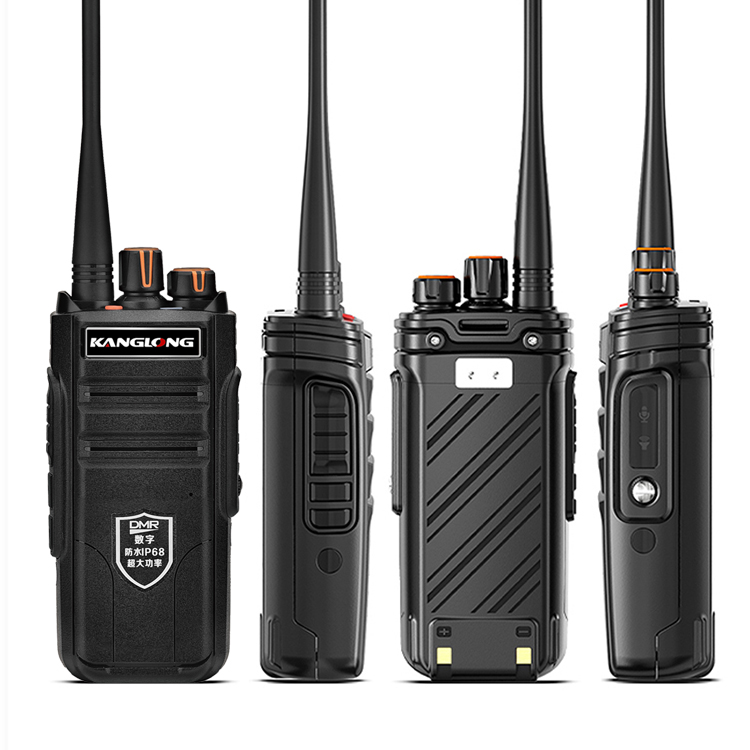
The KANGLONG DM-800 is a professional two-way radio featuring AES256 DMR encryption, 10W walkie talkie power, and same frequency relay radio technology in a rugged IP68 waterproof radio body.
Read More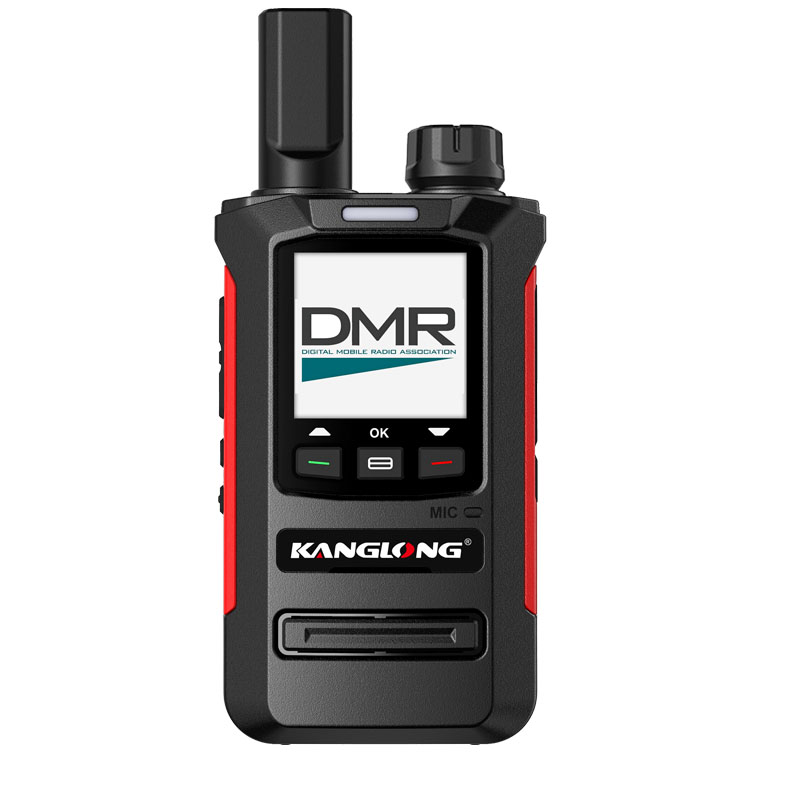
Ultra-compact and secure, the KANGLONG DM-390 combines professional AES256 digital encryption with a stylish 1.44" color display and Type-C charging, making it the ultimate high-performance communication tool for modern service and outdoor environments.
Read More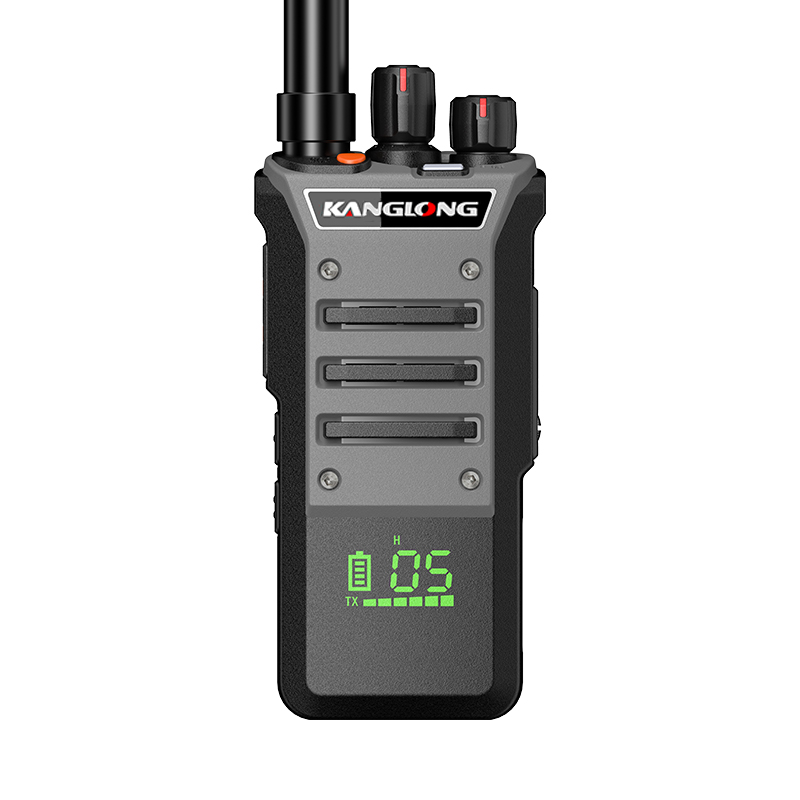
The ultimate 20W high-power, IP68 waterproof two-way radio featuring a 3200mAh battery that doubles as a emergency power bank to keep your team connected and powered up in the harshest environments.
Read More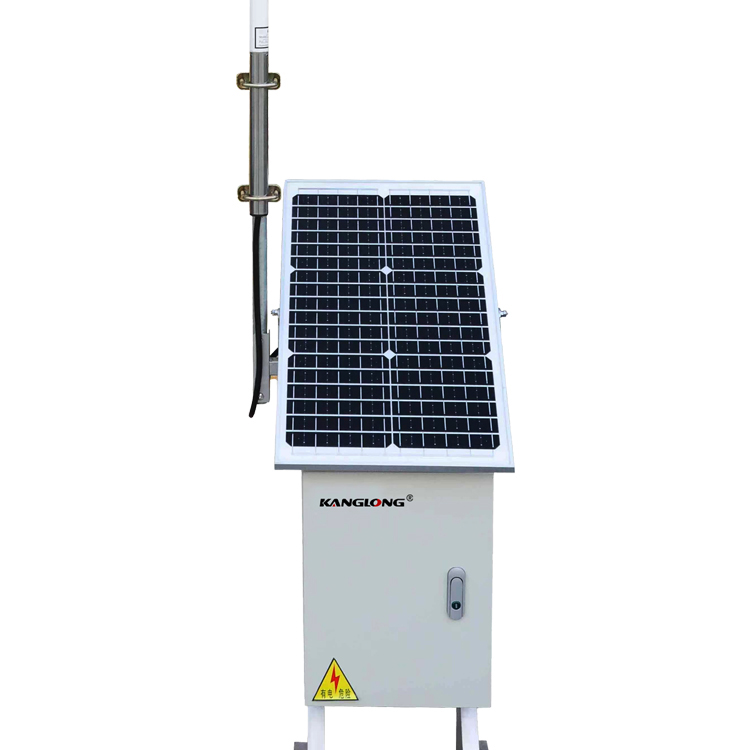
The D-7000 is a maintenance-free, solar-powered LoRa mesh repeater featuring a 20Ah high-capacity battery and 30-level signal jumping for permanent off-grid network coverage.
Read More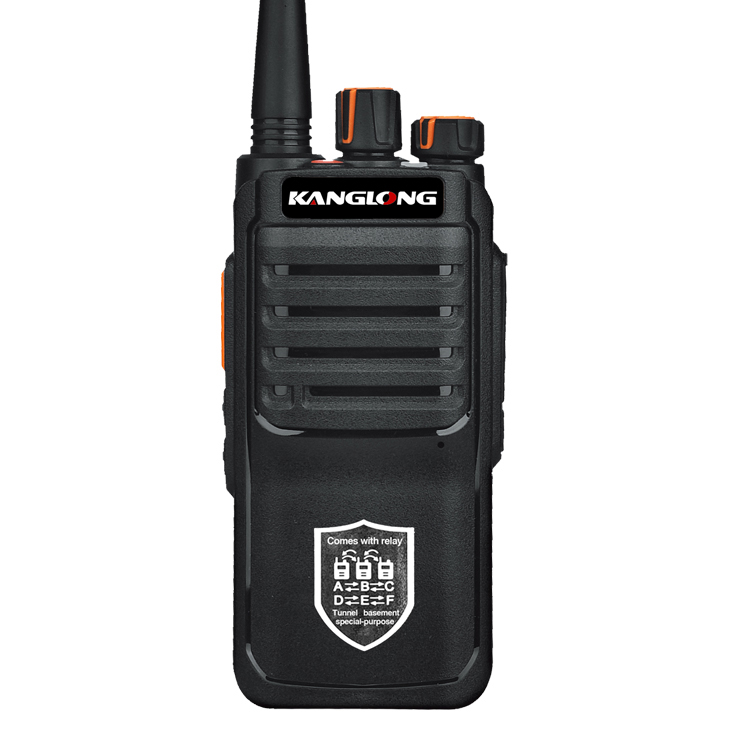
Looking for a long-range radio for dead zones? The D-600 5W Mesh Radio features 30-level signal jumping to provide a robust connection in tunnels, basements, and remote farms. Combining high-power performance with a rugged design, the D-600 is your go-to wireless communication tool for complex underground environments and no-signal areas.
Read More