 English
 عربي
عربي Русский
 Français
 Español
 Deutsch
The KANGLONG PG-60 is a versatile Dual Mode PoC Radio that seamlessly combines 4G public network communication with traditional VHF/UHF analog frequencies.
Read More


45 Minutes to Pushback: The Communication Gap That Can Slow Down an Airport Ramp
How KANGLONG PG-60 Helps Ground Handling Teams Reduce “Dead Time”
In civil aviation ground handling (GHA), time is divided into dozens of tightly connected tasks. For a narrow-body aircraft, the standard turnaround window from on-blocks to pushback is often compressed to 45 minutes or less. Baggage handling, refueling, catering, cleaning, aircraft maintenance, load control and many other teams must work together in sequence.
Ask a ramp supervisor what the biggest enemy of efficiency is, and the answer may not be equipment failure or bad weather. It may be a scene like this: a baggage tug idles at a remote stand for four minutes because nobody told the driver that the aircraft door was open.
When delays of just a few minutes happen repeatedly across several handling steps, the available turnaround window becomes even tighter. Trace these “dead-time” gaps back to their source, and they often point to the same issue: an instruction did not reach the right person at the right time.
Once the marshaller gives the “on-stand” instruction, the entire turnaround operation begins. At airports with complex layouts, remote stands or obstructed areas, conventional direct radio communication may not provide sufficient coverage. If the on-blocks confirmation is delayed, every following task has less time to complete. These situations call for a stable communication method that connects ramp personnel with operations management.
Soon after the aircraft reaches the stand, noise from equipment such as the APU (auxiliary power unit) rises significantly. Ground personnel often wear hearing protection. If the radio is not optimized for high-noise environments, instructions may need to be repeated, adding more time to ramp operations.
• Channel Queues: A ramp may have only two or three analog channels shared by multiple teams. During busy periods, an urgent instruction may have to wait until routine dispatch traffic ends.
• Remote stands and off-site handling areas are often far apart, with personnel distributed across the airport. This creates a higher demand for reliable cross-area communication.
• Conventional mobile communication tools are not always suited to real-time ramp coordination when staff are wearing gloves, working in high noise and moving constantly between positions. Unlocking a phone, finding a contact and waiting for a connection do not always match the pace of the operation.
• Multiple Employers, Multiple Systems: Different companies may use incompatible devices, leaving cross-company coordination dependent on shouting and hand signals.
• Loud Does Not Mean Clear: Audio that is not optimized for high-noise environments cannot be made intelligible simply by increasing the volume. In some cases, workers may even need to remove their hearing protection.
• End-of-Shift Battery Pressure: Low battery levels can interrupt communications and reduce the safety margin during long shifts.
Ramp operations have two very different communication requirements: safety instructions at close range must arrive with almost no delay, while cross-area dispatch needs to reach teams across the airport. The PG-60 dual-mode, dual-PTT design is built around this practical tension.
• Analog PTT: Uses traditional VHF/UHF direct mode with 5W output and does not depend on a network. It is suited to close-range coordination among ground handling teams, including stand operations, personnel dispatch and on-site status confirmation where response speed is critical.
• PoC PTT: Uses a 4G network for cross-area communication. It is suited to coordination between remote stands, the operations control center and the baggage sorting center, supporting long-distance collaboration between teams through public-network coverage.
Both communication modes are integrated into one terminal. Ground personnel can select the appropriate mode for the task at hand, reducing the need to carry multiple devices.
The PG-60 uses a 7.4V battery platform.
For long-shift operations, KANGLONG recommends preparing spare batteries and multi-unit chargers so batteries can be rotated and charged together during shift changes.
The PG-60 supports synchronizing existing analog frequencies and channel parameters to new devices, helping shorten the preparation time when additional radios join an existing two-way radio network.
With IP68-rated dust and water protection, the PG-60 is designed for common ramp conditions such as rain, snow, washdown and dust. It also supports frequency-band configurations for different regions, allowing the solution to be adjusted to local communication regulations and project requirements.
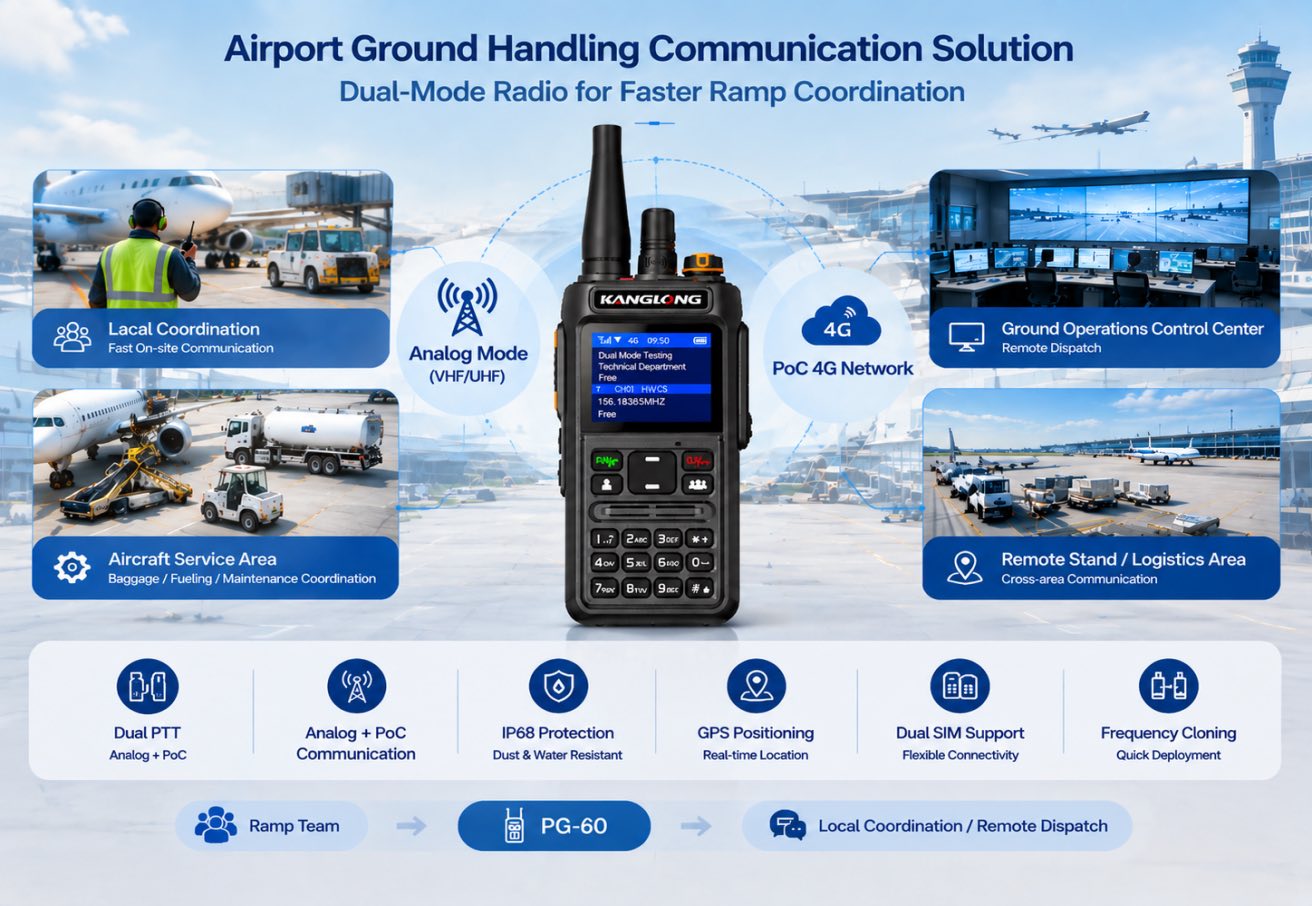
Airport ground handling communication usually involves two needs at the same time.
The first is rapid response near the stand, such as immediate coordination among personnel on site. The second is cross-area information sharing between remote stands, the operations control center and multiple handling teams.
A single communication method often struggles to satisfy both needs at once.
By combining analog communication with PoC public-network communication, the PG-60 gives teams a flexible choice for different operating scenarios:
|
Communication Need |
Traditional Analog Communication |
PoC Public-Network Communication |
|
Close-Range On-Site Coordination |
Suitable for rapid response |
Can be used as a supplement |
|
Cross-Area Team Collaboration |
Coverage is limited |
Supports long-distance communication |
|
Unified Dispatch Across Multiple Locations |
Requires additional system support |
Facilitates centralized management |
The actual deployment model can be adjusted according to the airport size, existing communication systems and ground handling procedures.
The table below provides one possible approach to ramp talkgroup allocation. The final configuration should be adapted to the airport’s organizational structure and operating procedures.
|
Role |
Local Analog (V/U) |
Public-Network Dispatch (PoC) |
|
Marshaller / Aircraft Maintenance |
On-blocks confirmation and cockpit coordination |
Reports to the operations control center |
|
Baggage Handling Team |
Coordination at the cargo hold door |
Coordination with the baggage sorting center |
|
Fueling / Catering Team |
Coordination around the aircraft stand |
Off-site vehicle fleet dispatch |
|
Ground Handling Supervisor |
All-call instructions on site |
Cross-area coordination |
|
Ground Operations Control Center |
On-site status adjustments |
Cross-area ground handling coordination |
A ramp schedule is built from countless coordinated steps, and many delays can be traced back to a communication gap or a late instruction. Providing a network-independent direct path for close-range safety commands, together with a public-network path that can connect teams across the airport, is one practical way to reduce these risks.
If you need a communication assessment based on a specific airport ramp layout, contact KANGLONG to discuss the application in more detail.
Global multi-band versions, IP68 protection and OEM/ODM customization are supported.
1. Why can’t airport ground staff rely only on phone-based push-to-talk? Why use dedicated two-way radios?
Ramp personnel typically wear gloves and hearing protection, and often work around moving vehicles and equipment. Unlocking a phone, searching for a contact and waiting for a call to connect do not fit the pace of ramp operations. One-touch radio communication removes these steps, which is why many airport ground handling teams continue to use professional radios for routine dispatch.
2. How are the PG-60’s two PTT buttons divided? Does this make the radio harder to use?
No. The two PTT buttons have fixed, separate functions: the Analog PTT is used for direct communication near the stand, while the PoC PTT is used for cross-area public-network communication. The operation is the same as with a conventional two-way radio. Staff can select the communication mode with the corresponding PTT button without repeatedly entering menus or changing settings.
3. Can the PG-60 still work if 4G coverage is weak at the airport?
The direct analog function does not depend on a cellular network. Within the available analog coverage area, the radio can still communicate through VHF/UHF mode, regardless of 4G coverage. The PoC function does require cellular coverage. If the signal is weak in a particular area, conduct an on-site signal test before deciding whether communications in that area should use the public network.
4. Can one radio system cover baggage, fueling, cleaning and other teams, or must each team use a different setup? Talkgroups can be assigned to different teams according to the airport’s organization, while the same radio model can be managed across the operation. Teams are separated by talkgroup rather than by radio model, which simplifies purchasing and maintenance and makes it easier to reassign devices when needed.
5. How quickly can radios be configured for new employees or temporary subcontractor personnel?
The timing depends on how frequencies and talkgroups are synchronized. The PG-60 supports frequency cloning, which can help new radios complete their basic parameter configuration quickly. Before purchase, confirm with the manufacturer whether a programming cable or dedicated tool is required so deployment expectations are clear.
6. What ramp weather conditions can IP68 protection handle?
IP68 is a high level of dust and water protection and can generally support rain, snow, standing water and routine washdown conditions. For extreme weather at a specific airport, such as conditions beyond the product’s test range or prolonged immersion, refer to the product manual and stated test conditions rather than relying on the rating alone.
7. How should radios be configured for long shifts of more than 10 hours?
The more reliable approach is to prepare an appropriate number of spare batteries based on shift length and use multi-unit chargers to rotate batteries during shift handovers. Do not make the entire communication plan dependent on the runtime of a single battery. For the actual runtime of a specific model, use measured results or the manufacturer’s current-batch specifications.
8. Can a ramp supervisor contact multiple team talkgroups at once instead of calling each one separately?
A unified dispatch group or management talkgroup can be configured for coordination across departments. When cross-team coordination or an emergency broadcast is required, the supervisor can select the appropriate group instead of calling each team individually. For routine operations, separate talkgroups are still recommended to prevent unrelated traffic from interfering with one another.
9. Does this solution require an additional base station or repeater?
The analog function can normally operate through direct radio-to-radio communication, or a repeater can be added to extend coverage. Whether a repeater is needed depends on airport obstructions and the required coverage radius. The PoC function relies on the public cellular network or carrier service and typically does not require dedicated wireless infrastructure. An on-site coverage test is recommended before deciding whether additional equipment is necessary.
10. Can the PG-60 replace an airport’s existing professional communication system?
The PG-60 is primarily designed to strengthen on-site coordination among ground handling teams. Its analog function supports fast, close-range communication, while its PoC function supports cross-area collaboration. At airports that already operate a professional aviation communication system, the PG-60 can be deployed as a supplementary communication tool and configured according to specific roles and workflows.
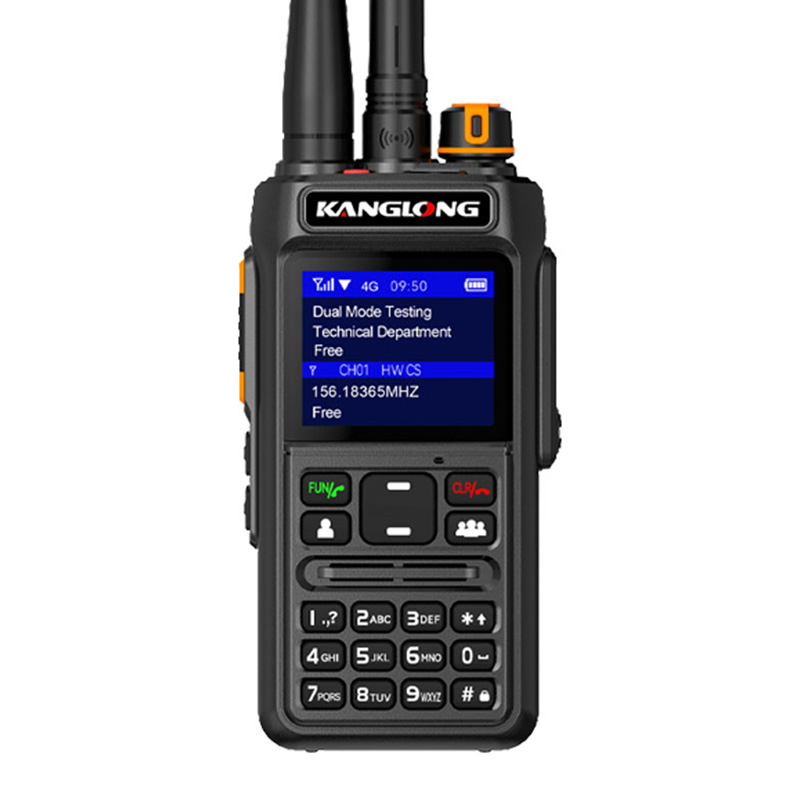
The KANGLONG PG-60 is a versatile Dual Mode PoC Radio that seamlessly combines 4G public network communication with traditional VHF/UHF analog frequencies.
Read More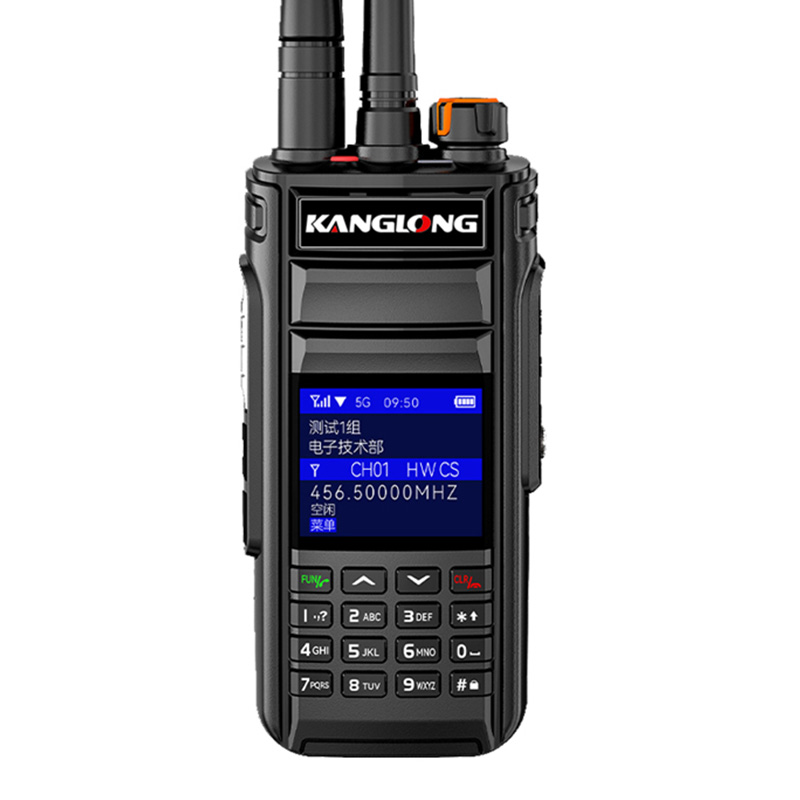
The KANGLONG PG-66 is a heavy-duty Dual Mode PoC Radio specifically frequency-tuned for Asian and African networks, offering seamless switching between 4G LTE and Analog frequencies with integrated optional GPS for real-time fleet positioning
Read More