Uneven Public Network Coverage in Scenic Areas: Optimizing Patrol and Dispatch Communication with KANGLONG PG-66 Dual-Mode Radios
Introduction: Two Signals on the Same Trail
In daily scenic area operations, high-traffic zones like entrance gates and visitor centers typically maintain reliable cellular coverage. However, deeper valleys, dense forest trails, and remote viewpoints often suffer from weak or fluctuating public network reception. When patrol teams and staff are dispersed across challenging terrain, dispatchers require flexible communication methods tailored to local network conditions to ensure real-time coordination.
Scenic area communication hurdles are shaped by natural topography, geographic span, network traffic density, and carrier infrastructure. Because network reliability varies significantly by zone, overall operational readiness cannot be judged solely by the signal strength at the main gate or administrative offices.
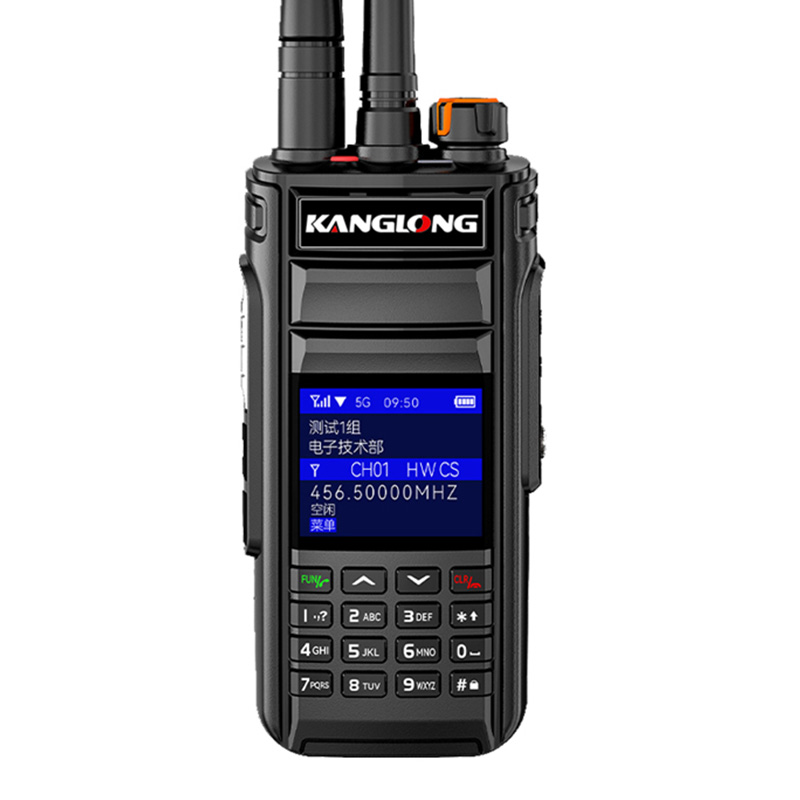
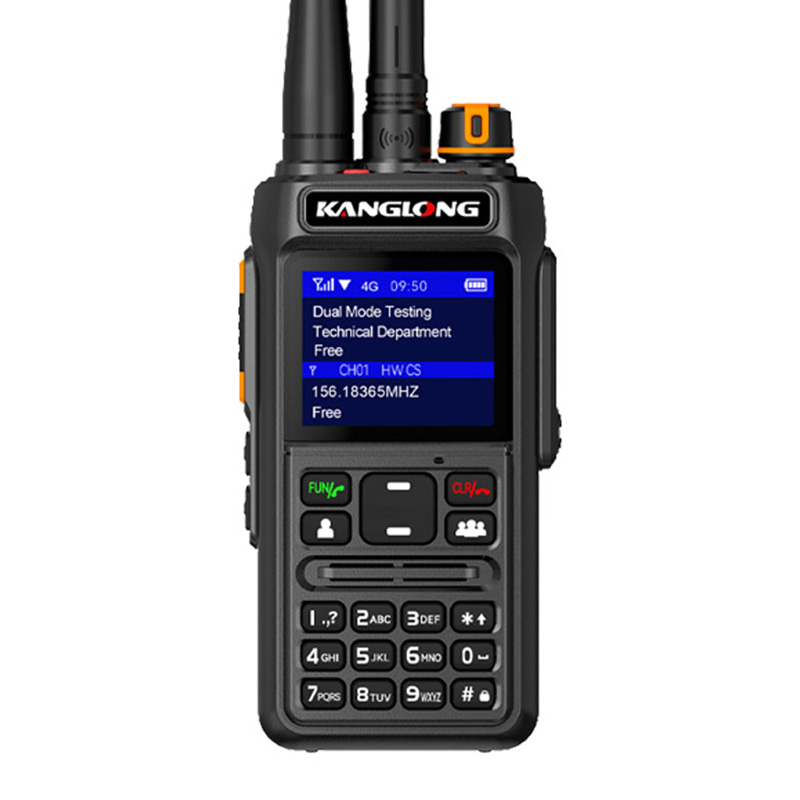
To address these field challenges, the KANGLONG PG-66 integrates 4G LTE PoC (Push-to-Talk over Cellular) and UHF/VHF analog communication into a single rugged device, featuring an intuitive Dual-PTT architecture. Scenic operations can now seamlessly map dedicated communication modes across varied terrain, team roles, and dispatch tasks.
1. Four Common Communication Bottlenecks in Scenic Areas
- Topography Disrupts Cellular Signals
Canyons, valleys, dense tree canopies, and architectural structures create localized dead zones. On-site RF assessments are essential to evaluate true public network reach.
- Dynamic Network Congestion During Peak Seasons
Surging visitor traffic during holidays places sudden demands on local cellular towers. Call quality and latency fluctuate based on local carrier bandwidth and infrastructure capacity.
- Cross-Departmental & Multi-Role Coordination
Security patrols, guest services, shuttle transit, facility maintenance, and emergency response teams must maintain both isolated channel traffic and cross-group interoperability.
- Harsh Outdoor Operating Conditions
Park rangers and outdoor field teams frequently face rain, high humidity, dust, and temperature extremes, requiring commercial-grade ingress protection and thermal resilience.
2. PG-66 System Architecture & Core Capabilities
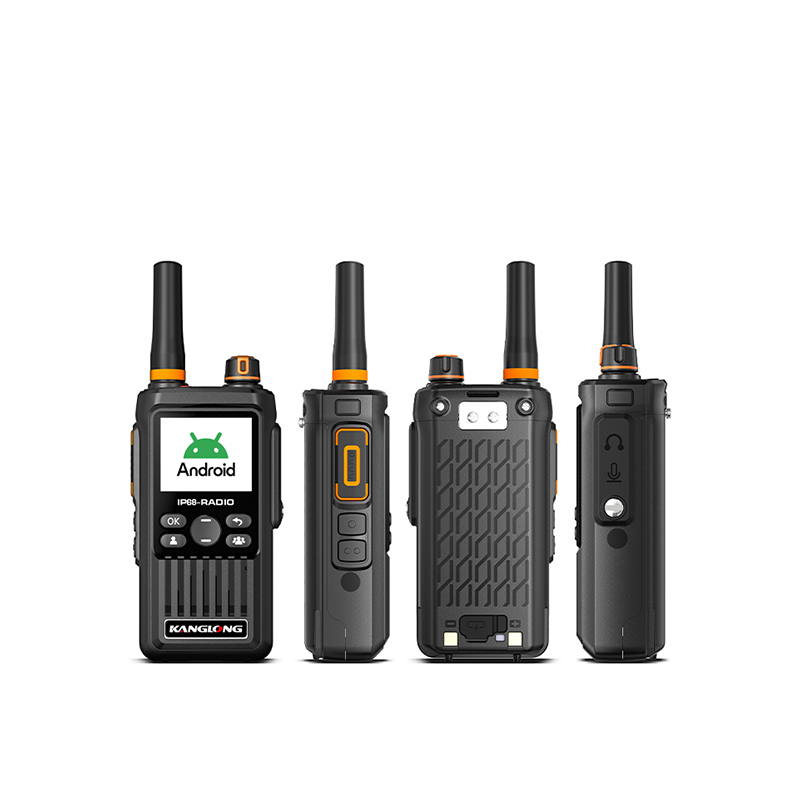
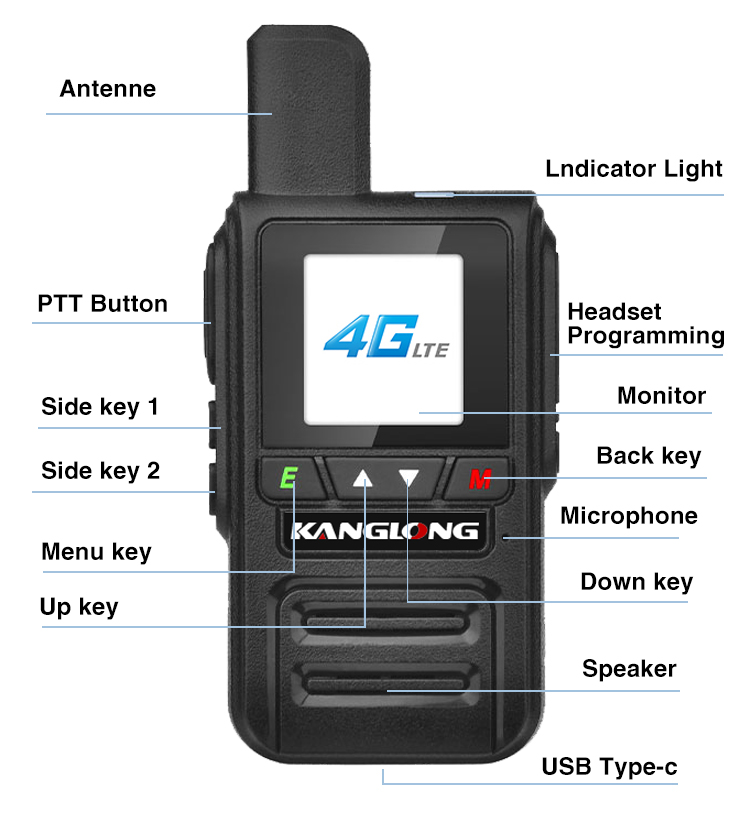
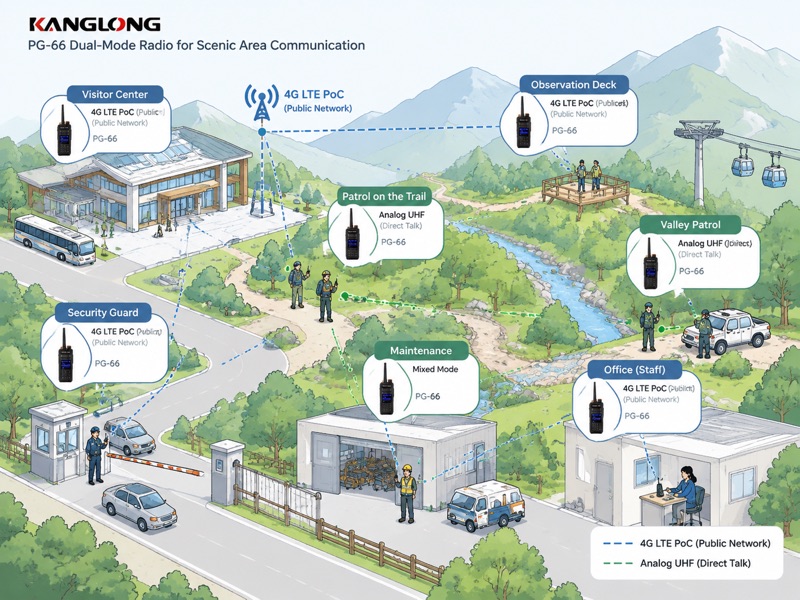
The PG-66 is an IP68-rated, dual-mode handheld two-way radio combining nationwide 4G LTE PoC with direct analog communication. Below is an overview of its core functionality and operational planning considerations:
1. Four Versatile Operating Modes: Cellular, Analog, Hybrid, and Repeater
- Cellular (PoC) Mode: Designed for long-range, cross-zone dispatch over 4G LTE networks.
- Analog Mode: Delivers direct point-to-point (simplex) voice communication across valleys and forested areas without relying on cellular towers.
- Hybrid Mode: Enables simultaneous standby for personnel who need to monitor both public network talkgroups and local analog channels.
- Repeater Mode: Listed in system specifications for specific linking scenarios. Exact routing logic, bridging protocols, and hardware requirements should be verified with technical support during the solution design stage.
2. Dual-PTT Architecture: Instant, Dedicated Transmission
The physical dual-PTT buttons eliminate menu switching. Operators can instantly press the primary PTT for nationwide PoC dispatch or the secondary PTT for local analog direct talk, significantly improving tactical response speed.
3. Dual SIM Backup: Carrier Redundancy
With Dual SIM Single Standby (DSSS), operators can install SIM cards from two different cellular carriers to leverage the best local coverage in mountainous regions.
4. Real-Time GPS Tracking & Route Playback (Optional)
The optional high-precision GPS module allows central dispatchers to visualize field ranger coordinates on a live console map and review historical patrol routes, enhancing safety during night shifts and wilderness operations.
5. Wireless Frequency Cloning (One-Touch Channel Sync)
For scenic areas managing legacy analog radios, the PG-66 supports over-the-air frequency cloning. It quickly replicates compliant analog frequencies and CTCSS/DCS sub-tones from existing units, ensuring smooth multi-unit onboarding and phased hardware migration.
6. Cloud-Based FOTA Firmware Upgrades
The PG-66 supports Firmware Over-The-Air (FOTA) updates, enabling remote feature enhancements and maintenance without recalling devices from field outposts.
7. Crisp Display, Audio Output, and Industrial Durability
Equipped with a 1.77-inch color display, a 7.4V / 2200mAh battery, a powerful 1.5W audio speaker for noisy outdoor environments, and a compact body weighing approximately 315g (with battery), the PG-66 ensures reliable all-day operational endurance.
3. Key Technical Specifications
| Parameter / Feature |
Specification |
| Model |
PG-66 |
| Communication Modes |
4G LTE PoC + Analog (UHF/VHF) |
| Analog Frequency Range |
400–470 MHz / 136–174 MHz (Region dependent) |
| Analog Channels |
16 Channels |
| Analog RF Output Power |
High: 5W / Low: 3W |
| 4G LTE Frequency Bands |
LTE FDD: B1 / B3 / B5 / B8; LTE TDD: B38 / B39 / B40 / B41 |
| Ingress Protection Rating |
IP68 (Dustproof & Waterproof) |
| Operating Temperature |
-20°C to +60°C |
| Battery Capacity |
7.4V / 2200mAh Li-ion |
| Display |
1.77-inch Color Screen |
| Charging Interface |
USB Type-C |
| Dimensions & Weight |
Approx. 123 × 62 × 39 mm (excl. antenna) | Approx. 315g (with battery) |
| Optional Features |
GPS Positioning & Historical Route Playback |
Note: Specifications are based on official factory documentation. Final hardware configuration is determined by the specific order version (e.g., RF band variant and GPS configuration).
4. Zoned Operating Mode Reference for Scenic Areas
| Zone / Operational Scenario |
Primary Communication Requirements |
Recommended Mode & Evaluation |
| Entrances, Visitor Centers & Parking Areas |
Routine dispatch, cross-zone coordinating, and administrative calls. |
Deploy PoC Mode where cellular reception and PoC services are stable. |
| Main Thoroughfares & Observation Decks |
Patrol reporting, crowd control, and real-time status updates. |
Evaluate PoC or Hybrid Mode depending on signal consistency across lookout points. |
| Deep Valleys & Forest Hiking Trails |
Short-range direct team contact across rugged terrain and cellular dead zones. |
Deploy Analog Mode and verify simplex RF range across local topography. |
| Peak Holiday Traffic Hours |
Cross-departmental surge coordination and traffic management. |
Monitor real-time network latency; utilize dual-PTT to switch dynamically as needed. |
| Night Patrols & Wilderness Security |
Ranger safety check-ins, lone-worker tracking, and emergency callouts. |
Utilize Analog Mode combined with optional GPS Tracking for real-time location visibility. |
5. Role-Based Communication Matrix
| Department / Role |
Public Network (PoC) Configuration |
Analog RF Channel Configuration |
| Security & Patrol Rangers |
Assigned to Security Talkgroup for park-wide alerts and incident logging. |
Dedicated local patrol frequency for direct off-grid team communication. |
| Medical & Emergency Response |
Priority Emergency Talkgroup linked to central dispatch. |
Assigned licensed emergency channel for local rescue operations. |
| Shuttle Transit & Cable Car Operations |
Transit Talkgroup mapped by route, station, and depot. |
Station-specific channel for local boarding and platform management. |
| Guest Services & Ticketing |
Customer Service Group for queue management and lost-and-found. |
Gate-specific channel for entrance coordination. |
| Sanitation & Facility Maintenance |
Logistics Talkgroup for park-wide work orders. |
Zoned operational channels for localized task response. |
| Central Command & Dispatch |
All-call priority broadcast and console-level talkgroup supervision. |
Base station / repeater monitoring channel for local field activities. |
6. Practical Migration: Coexistence of Legacy and New Radios
Most scenic parks already operate legacy analog radio fleets. Replacing entire fleets at once creates budgetary strain and risks operational disruption.
The PG-66's Wireless Frequency Cloning feature enables seamless backward compatibility. Once frequencies and CTCSS/DCS sub-tones are verified, park operators can execute a pragmatic 3-stage migration plan:
- Step 1: Pilot Testing on Key Workgroups
Audit communication requirements across security patrol and emergency response teams. Deploy a pilot batch of PG-66 units for field coverage and interoperability testing.
- Step 2: Interoperability Verification & Fleet Planning
Validate dual-PTT workflow efficiency and seamless communication between PG-66 units and existing analog radios. Establish which legacy units to retain.
- Step 3: Phased Rollout & Full Network Integration
Progressively expand PG-66 deployment across transit, maintenance, and administrative teams, optimizing talkgroups and integrating GPS dispatch consoles.
7. Operational Boundaries & Planning Notes
- Cellular Band Compatibility: The PG-66 is optimized for regional 4G LTE bands. Verify local carrier band compatibility prior to procurement and international deployment.
- Analog Frequency Versions: Available in UHF (400–470 MHz) or VHF (136–174 MHz) configurations. Confirm required band options before ordering.
- Regulatory & Licensing Compliance: Use of analog frequencies must comply with local telecommunications and radio management regulations. Ensure proper frequency licensing and power allocations.
- Off-Grid Simplex Range: While analog mode operates independently of cellular networks, effective range depends on distance, terrain elevation, vegetation, and RF interference. On-site field range tests are strongly recommended.
- PoC Service Prerequisites: 4G LTE PoC functionality requires active SIM cards with sufficient data allowances, compatible network coverage, and an active PoC dispatch platform subscription.
8. Conclusion
Managing expansive, topographically complex scenic areas requires adaptable communication tools. The KANGLONG PG-66 bridges the gap between wide-area 4G LTE PoC dispatch and direct analog off-grid communication. Featuring dual-PTT buttons, wireless frequency cloning, IP68 ruggedization, and optional GPS tracking, it empowers park managers to build a dependable, future-ready communication network.
Interested in upgrading your scenic area's communication system?
Contact the KANGLONG engineering team to schedule a field evaluation and discover how the PG-66 can optimize your park operations.
FAQ
Q1: Can the PG-66 still transmit in areas without 4G cellular coverage?
A: Yes. The PG-66 operates seamlessly in Analog Mode, providing direct point-to-point voice communication with compatible analog radios regardless of cellular availability.
Q2: What operating modes does the PG-66 support?
A: It supports four modes: Cellular (PoC) Mode, Analog Mode, Hybrid Mode (simultaneous dual-standby), and Repeater Mode.
Q3: Does the PG-66 support Dual SIM cards?
A: Yes, it features Dual SIM Single Standby (DSSS), allowing you to install SIM cards from two different telecom operators for carrier redundancy in mountainous terrain.
Q4: Can the PG-66 communicate with our existing analog walkie-talkies?
A: Yes. With built-in Wireless Frequency Cloning, the PG-66 can quickly copy compatible analog frequencies and sub-tones to interoperate with existing analog fleets.
Q5: Is GPS real-time positioning supported?
A: Yes, high-precision GPS positioning and historical route playback are available as an optional hardware configuration.
Q6: What is the Ingress Protection rating of the PG-66?
A: It is rated IP68 for water and dust resistance, making it suitable for demanding outdoor weather conditions including heavy rain and dusty environments.
Q7: How long does the PG-66 battery last?
A: Powered by a 7.4V / 2200mAh Li-ion battery with Type-C charging, typical operating time depends on duty cycle (transmit/receive/standby ratio) and active operating modes.
Q8: Can the device operate in freezing winter conditions?
A: The PG-66 has an operating temperature range of -20°C to +60°C, making it well-suited for winter mountain patrols.
Q9: Can the PG-66 be deployed for overseas projects?
A: Yes, provided the destination country's 4G LTE frequency bands, carrier network standards, and local radio regulatory requirements are confirmed prior to shipment.
Q10: Does KANGLONG support OEM / Logo customization?
A: Yes. KANGLONG provides customized branding, firmware tailoring, and accessory customization. Please contact our sales team for minimum order quantities (MOQ) and lead times.
 English
 عربي
 Русский
 Français
 Español
 Deutsch