 English
 عربي
عربي Русский
 Français
 Español
 Deutsch
The KANGLONG PG-60 is a versatile Dual Mode PoC Radio that seamlessly combines 4G public network communication with traditional VHF/UHF analog frequencies.
Read More


Your Vehicles Disappear the Moment They Leave the Gate—Until They Don't.
The Fleet Manager's Story: Mark, Regional Logistics Director
"I run 85 trucks across three provinces. My cell phone has 47 driver contacts saved. Every day, I spend the first two hours of my shift just calling people one by one—asking where they are, whether they picked up the cargo, if they hit a traffic jam. By the time I reach the last driver, the first one's situation has already changed. It is a daily fire drill, and I have been burning money on overtime, fuel waste, and missed delivery windows for years."
If this sounds familiar, you are not alone. The logistics industry has poured millions into TMS software, route optimization algorithms, and GPS tracking apps on smartphones. Yet the fundamental problem remains: you cannot command a fleet in real time using tools designed for consumer communication.
Kanglong Radio, with over two decades of professional wireless communication manufacturing in Quanzhou, China, delivers a purpose-built solution that puts your entire fleet on a single, live, instantly responsive command interface. No fluff. Straight to operations.
A customer calls at 10:00 AM with an urgent reroute request. You spend the next 45 minutes calling eight drivers one by one—dialing, ringing, waiting, explaining, hanging up, dialing again. By the time you finish, traffic conditions have changed. The fuel wasted on wrong turns alone adds up to thousands of dollars per month.
Yes, your drivers carry smartphones. But a driver wearing work gloves at 70 km/h cannot swipe, unlock, tap, and read a chat message. When a route update comes in, they either ignore it or pull over—both options cost you money. Worse, in areas with weak cellular data, map-based tracking apps lag behind by 5 to 15 minutes, rendering them useless for real-time fleet management.
You invested in a fleet of analog radios five years ago. Now you want GPS tracking and digital dispatch, but replacing everything would bankrupt your quarterly budget. You are stuck between legacy hardware and modernization—and every month of delay erodes another slice of your margin.
Kanglong's logistics fleet solution is built around three tightly integrated components: the Gxin Cloud Dispatch Platform, dedicated IoT SIM cards, and a tiered PoC radio hardware lineup tailored to different roles within your fleet.
The Gxin platform is the brain of the entire system. One account supports multiple simultaneous voice dispatch sessions, meaning your lead dispatcher, shift supervisor, and regional manager can each operate independent control consoles from different locations—all pulling from the same fleet data.
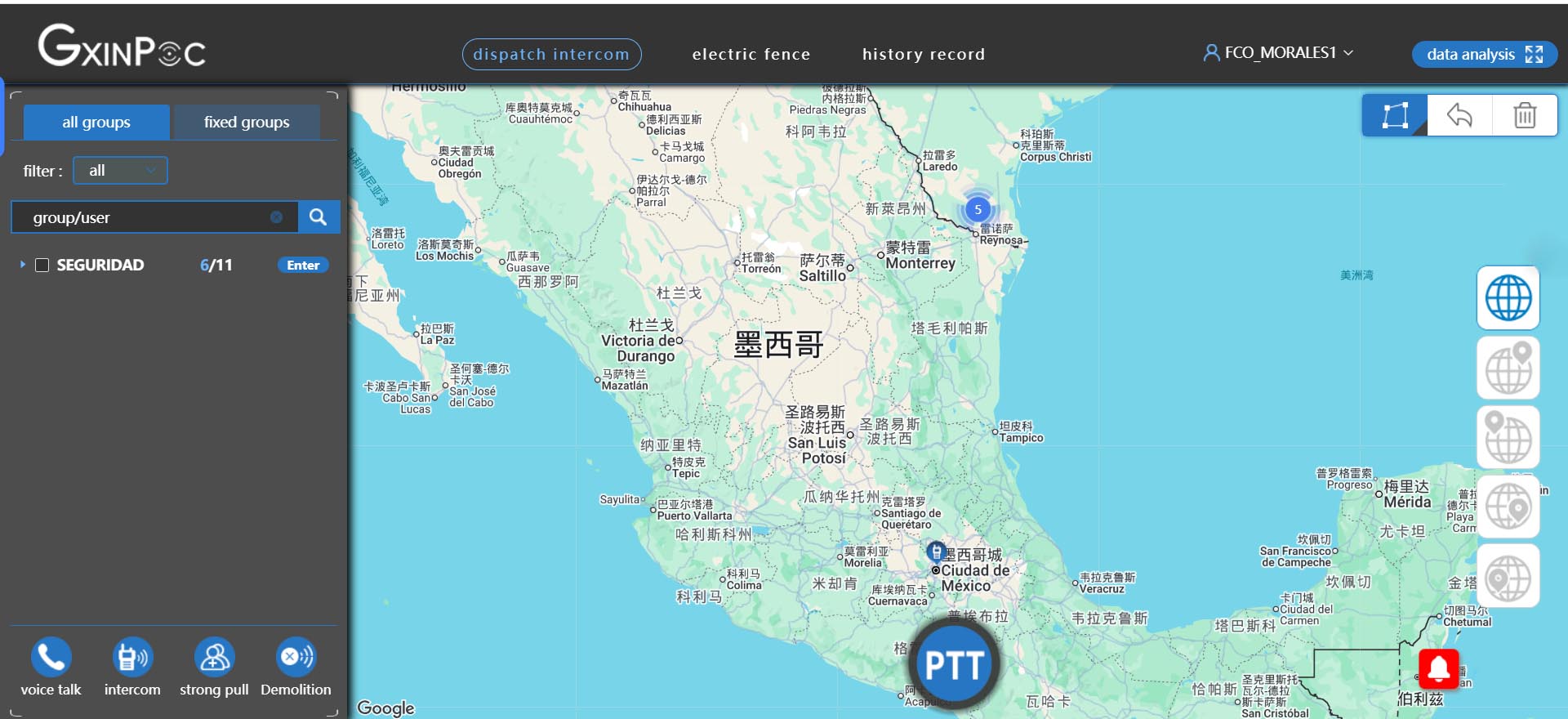
Core Dispatch Capabilities:
1. Real-Time GPS Fleet Visualization: Every vehicle appears as a live-moving marker on a map interface. Click any unit to see its exact speed, heading, route history, and idle time. No more calling to ask "where are you?"
2. One-Touch PTT Fleet Broadcast: Press a single button on the Gxin console to instantly push a voice command to every driver in the fleet simultaneously. All eighty-five trucks hear the same instruction at the same moment. Zero latency gap between the first and last recipient.
3. Ad-Hoc Temporary Group Creation: A multi-vehicle accident blocks your main transit corridor? Drag-and-drop the affected ten drivers into a temporary "Reroute Task Force" group in under five seconds. Issue coordinated turn-by-turn instructions. Disband the group when the crisis passes—no permanent channel clutter.
4. Subscription-Based Recording & Geofence Management:
Voice Recording:
Geofence Alerts:
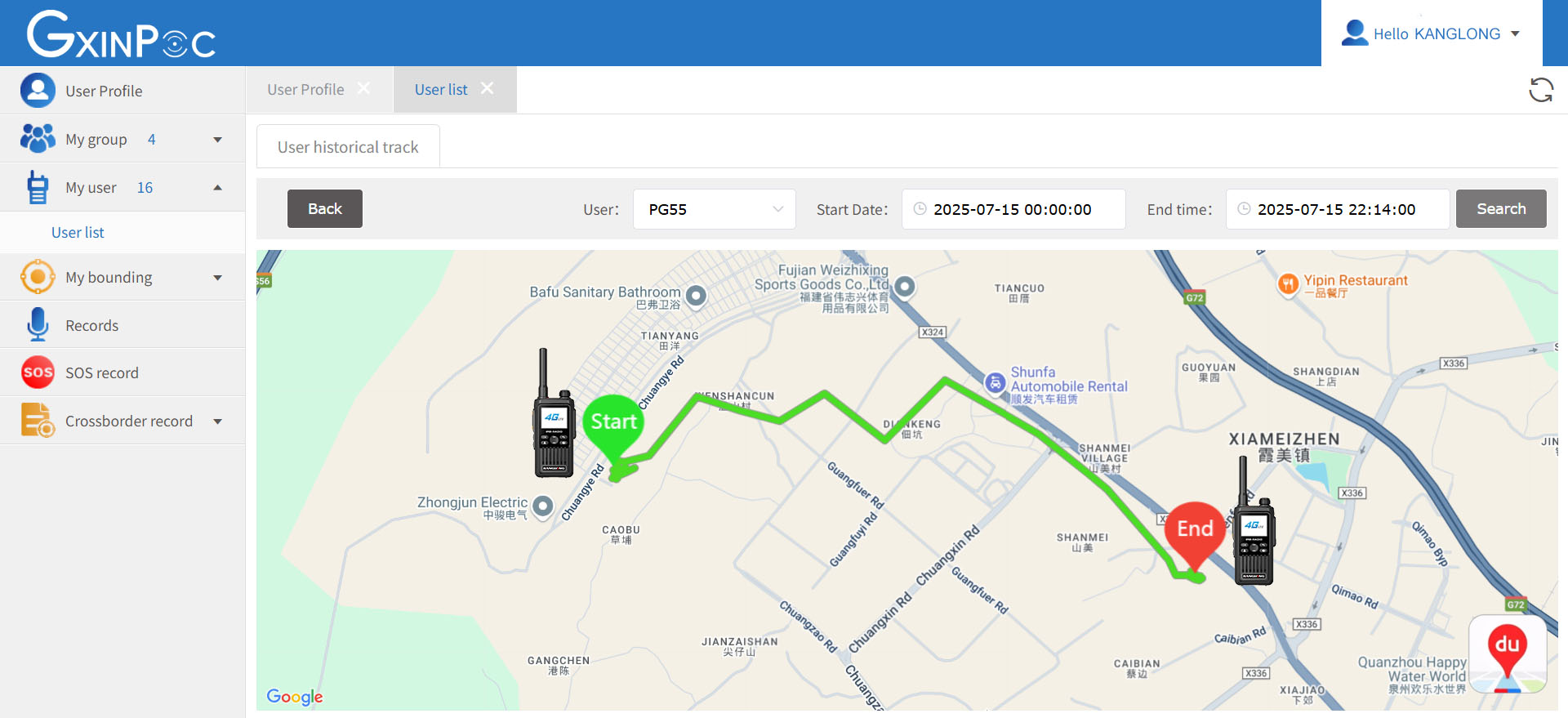
Unlike consumer smartphone SIM cards that deprioritize data during network congestion, Kanglong provides industrial-grade IoT SIM cards specifically provisioned for PoC voice and GPS data transmission. These SIMs:
● Operate on multi-carrier 4G LTE networks with automatic failover—if one carrier's signal drops, the card switches to the strongest available network without user intervention.
● Maintain a persistent, low-bandwidth data heartbeat optimized for voice compression and GPS telemetry, consuming minimal data while ensuring sub-300ms PTT transmission latency.
● Support nationwide and cross-border roaming for fleets operating across state or national boundaries.
The result: your radios stay connected in rural depots, highway corridors, and dense urban canyons where consumer phones drop calls.
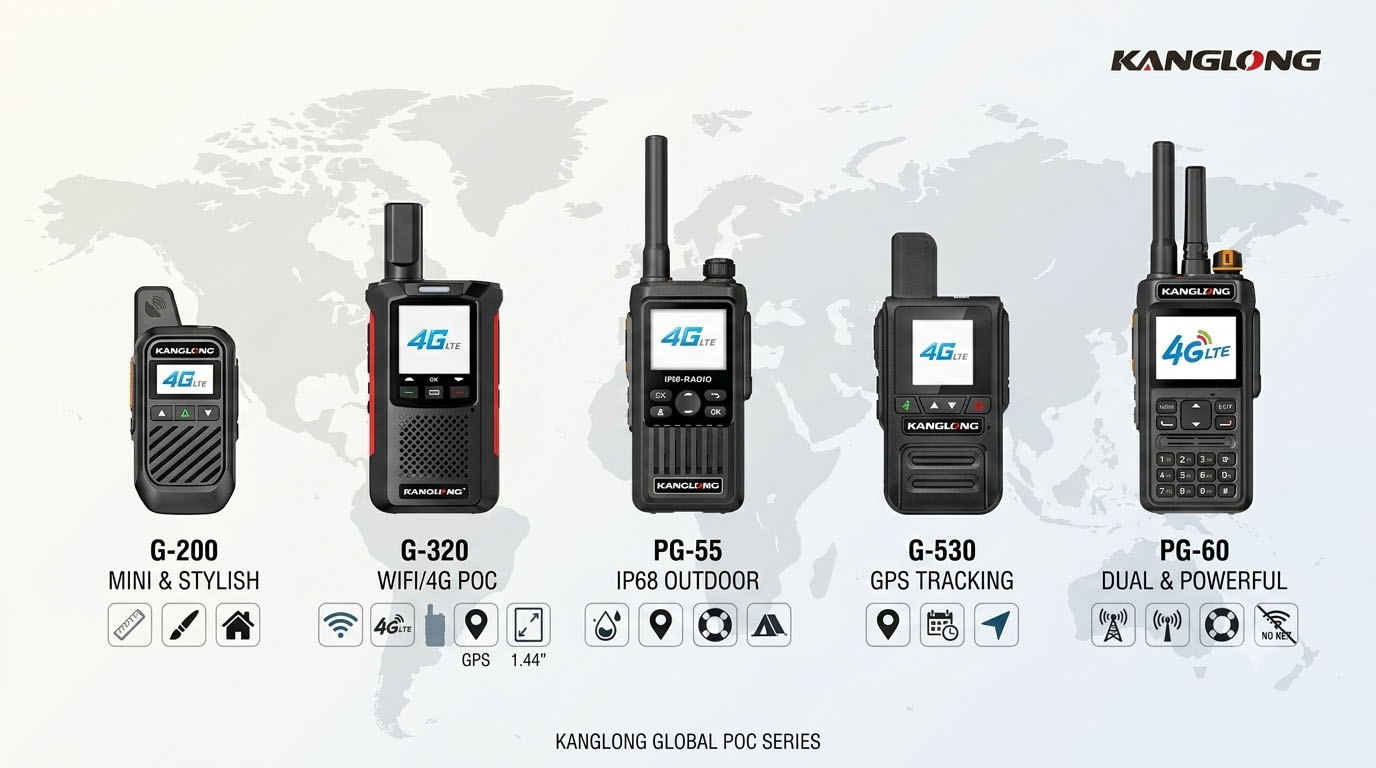
Not every team member needs the same radio. A long-haul trucker has different requirements than a warehouse dock worker. Kanglong's lineup lets you match the device to the job—maximizing functionality while controlling costs.
G-200 / G-220 — Ultra-Mini Collar Clip Radios
Built for dispatchers, shift supervisors, and administrative staff who need always-available communication without the bulk. At roughly the size of a Bluetooth earpiece, the G-200 and G-220 clip directly onto a shirt collar or lapel. The speaker is angled toward the ear, the microphone positioned near the mouth—hands-free voice access while typing on a keyboard or reviewing manifests. Perfect for the indoor command staff managing Gxin from a desktop while staying reachable on the fleet channel.
G-320 / G-360 — Compact WiFi-Enabled Budget Radios
For local delivery drivers, warehouse-to-vehicle coordinators, and cross-dock teams. The G-320 and G-360 add built-in WiFi capability, allowing automatic firmware updates and configuration sync when the vehicle returns to the depot's WiFi network—no manual programming required. Their compact profile (smaller than a smartphone) keeps belt space free for scanners and tools. The WiFi feature also enables offloading voice recording data when within depot range, reducing cellular data consumption. If budget is tight and your team operates primarily within city limits, these are your cost-efficient workhorses.
G-530 — High-Capacity Logistics Workhorse
Purpose-built for the long-haul driver. The G-530 features a 2500mAh polymer lithium battery rated for 100+ hours of standby and 12+ hours of continuous active use with GPS tracking enabled. Its oversized 36mm speaker delivers 1-watt audio output—loud enough to cut through highway road noise and diesel engine rumble inside the cab. A transflective 1.44-inch LCD remains readable under direct sunlight, showing channel group, battery level, signal strength, and caller ID at a glance. The side-mounted mechanical PTT button is textured and oversized: a driver wearing thick work gloves finds it by feel and presses without looking. This is the radio you hand to the driver who spends ten hours behind the wheel and cannot afford a dead battery at 4:00 PM.
PG-55 — IP68 Rugged Outdoor Radio
For fleet supervisors who step out of the vehicle onto muddy construction sites, rain-soaked loading docks, and dusty quarry roads. The PG-55 carries a full IP68 waterproof and dustproof rating—submersible in 1.5 meters of water for 30 minutes, fully sealed against fine particulate ingress. The reinforced chassis survives repeated 2-meter drops onto concrete. If a supervisor falls into a flooded loading bay during a storm or drops the radio into a puddle of diesel and gravel, they pick it up, shake it off, and keep talking. No downtime, no replacement cost.
PG-60 — Dual-Mode Analog + PoC with Repeater Function
This is the strategic bridge device that saves you from replacing your entire legacy fleet. The PG-60 operates in two modes simultaneously:
PoC Mode (4G LTE):
● Unlimited-range voice communication and GPS tracking over cellular networks. Your entire nationwide fleet stays connected on a single platform.
● Direct RF communication with existing analog radios your team already owns—the Motorola units from 2018, the Kenwood handhelds in the warehouse, the fixed-mount radios in older trucks.
The PG-60's killer feature is its built-in dual-mode relay/repeater function. When a PG-60 unit receives an incoming PoC voice transmission from dispatch, it automatically rebroadcasts that audio on its configured analog frequency. The old analog radios in your warehouse hear the dispatch instruction without any hardware modification. Conversely, when a warehouse worker presses PTT on their legacy analog handheld, the PG-60 captures that transmission and bridges it onto the PoC network—so the dispatcher hears both new and legacy devices as one unified team.
The ROI math is immediate: instead of scrapping 50 functional analog radios and spending $15,000+ on a full fleet replacement, you deploy a handful of PG-60 units as gateways. Your legacy investment stays productive. Your new PoC devices integrate seamlessly. Your budget stays intact.
06:30 AM — Fleet Activation
The morning dispatcher, Lisa, logs into the Gxin console. She opens three simultaneous voice sessions on her dual-monitor setup: one for the long-haul fleet channel, one for the local delivery group, and one for the warehouse loading crew. Eighty-five green GPS markers populate her map within 90 seconds of drivers powering on their radios.
08:15 AM — Geofence Arrival Alert
A Gxin notification flashes: "Unit 23 entered geofence: Southern Industrial Park — Customer A." Lisa sees that Driver Chen has arrived exactly at the 8:15 AM delivery window. She does not need to call him. The geofence alerted her automatically. She notes the arrival time in the system and moves on.
11:40 AM — Ad-Hoc Reroute Group
A tanker truck has overturned on Highway G15, shutting down both northbound lanes. Lisa sees four fleet vehicles on her map approaching the blockage. She selects all four on the Gxin interface, creates a temporary group called "G15 Reroute," and issues a single PTT broadcast:
"All G15 northbound units, highway blocked at kilometer marker 187. Exit immediately at ramp 182. Take Provincial Road S301 to rejoin at ramp 195. Acknowledge."
Four drivers press their PTT buttons. Four confirmations come back within five seconds. The entire reroute is coordinated in under fifteen seconds—no phone calls, no delayed text messages, no missed instructions.
02:30 PM — Legacy Analog Integration in Action
A warehouse forklift operator using a five-year-old analog Kenwood handheld notices a pallet mislabeled for the wrong truck. He presses PTT and says: "Dispatch, Bay 3 has a labeling error on pallet 447." The nearby PG-60 gateway unit picks up the analog transmission, converts it to a PoC data packet, and routes it to Lisa's Gxin console. Lisa hears the message clearly and responds. The forklift operator hears her reply through his legacy radio. The bridging is transparent to both parties.
05:00 PM — Recording Review for Customer Dispute
A customer claims their shipment was delayed by two hours due to poor dispatching. Lisa's supervisor pulls the Gxin voice recording log for Unit 23 and the dispatch channel. The timestamped audio confirms: the driver was rerouted at 11:42 AM, acknowledged at 11:43 AM, and the delay was caused by the G15 highway closure—an event outside company control. The dispute is resolved in three minutes with hard evidence.
|
Cost Driver |
Before Kanglong |
After Kanglong |
|
Dispatcher calls per day |
120+ individual phone calls |
Sub-5 PTT fleet broadcasts |
|
Reroute coordination time |
45–60 minutes (sequential calling) |
Under 30 seconds (simultaneous broadcast) |
|
Legacy radio write-off |
Full fleet replacement required |
PG-60 bridge preserves existing investment |
|
Missed-delivery disputes |
Verbal claims, no evidence |
Timestamped recording logs with GPS data |
|
Seasonal driver onboarding |
Phone number collection, app installation |
Hand them a pre-configured radio, done |
|
Fuel waste from wrong turns |
Unquantified monthly loss |
Real-time GPS intervention prevents detours |
A mid-sized fleet of 50 vehicles typically recovers the full system investment within 4 to 6 months through fuel savings, reduced overtime, and eliminated dispute-related revenue loss alone.
The Kanglong logistics fleet solution is not a software project that requires six months of IT integration. The architecture is:
Activate Gxin account
1. — provisioned within 24 hours with your fleet structure and user roles.
Insert IoT SIM cards
2. — pre-activated, multi-carrier, insert into each radio.
Distribute radios by role
3. — G-530 for drivers, G-200 for supervisors, PG-60 as legacy bridge units.
Log in and dispatch
4. — your fleet appears on the map. Start talking.
No server racks. No VPN tunnels. No firmware programming courses. Just purpose-built hardware and a cloud platform designed for people who move cargo, not configure networks.
Q1. What is the best communication system for fleet management?
A: The best fleet communication system depends on your operating environment. For urban fleets, PoC radios provide nationwide coverage via 4G/5G networks. For remote mining, ports, or construction sites without cellular coverage, LoRa radio systems offer long-range communication without relying on public networks. DMR radios are ideal for businesses that require secure, private digital communications.
Q2. How can LoRa radios improve fleet operations?
A: LoRa radios provide long-distance voice communication with low power consumption and no monthly network fees. They help fleet operators maintain reliable communication in remote areas, reduce operating costs, and improve dispatch efficiency where cellular networks are unavailable.
Q3. What is the difference between DMR, PoC, and LoRa radios?
A:DMR radios are best for private digital radio networks with clear audio and secure communication.
PoC radios use cellular networks for unlimited nationwide or global communication.
LoRa radios enable long-range communication without base stations or SIM cards, making them ideal for off-grid operations.
Q4. Can Kanglong provide OEM and ODM fleet communication solutions?
A: Yes. Kanglong offers complete OEM and ODM services for DMR, PoC, Analog, and LoRa radios, including custom branding, firmware customization, packaging design, accessories, and project-based communication solutions for distributors and system integrators worldwide.
Q5. Which industries benefit most from fleet communication systems?
A: Fleet communication solutions are widely used in logistics, transportation, mining, ports, construction, utilities, agriculture, oil & gas, emergency response, and public safety. Reliable real-time communication helps improve operational efficiency, driver safety, and team coordination.
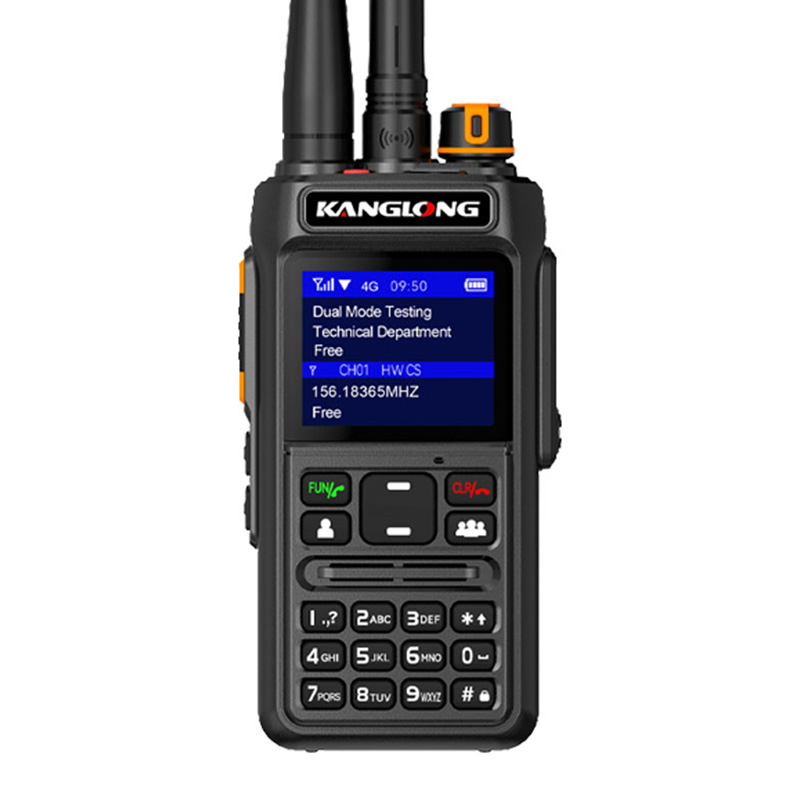
The KANGLONG PG-60 is a versatile Dual Mode PoC Radio that seamlessly combines 4G public network communication with traditional VHF/UHF analog frequencies.
Read More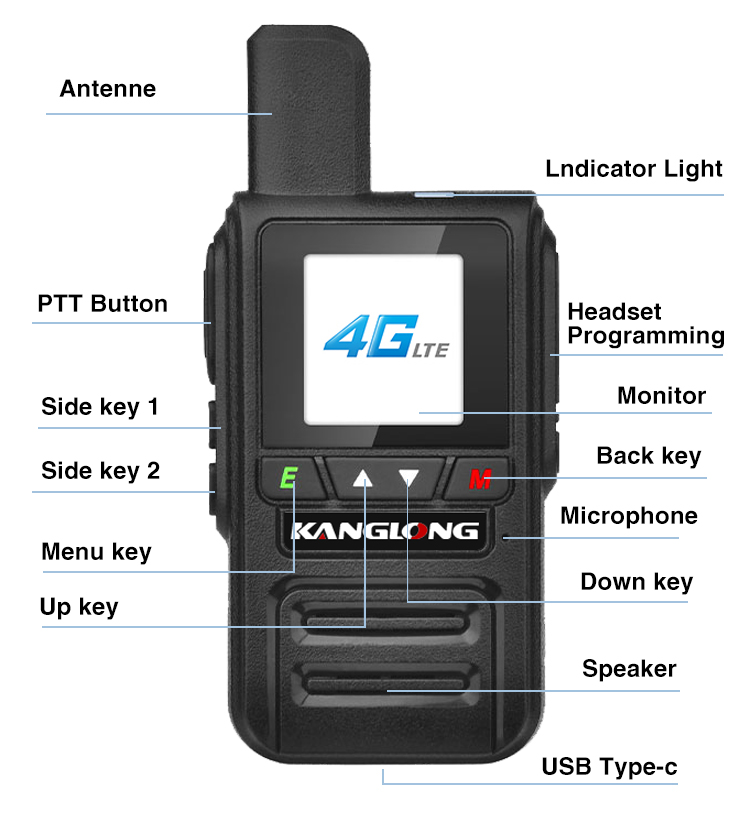
The G-530 is a cost-effective 4G network radio that delivers premium rugged performance and unlimited range without the high price tag.
Read More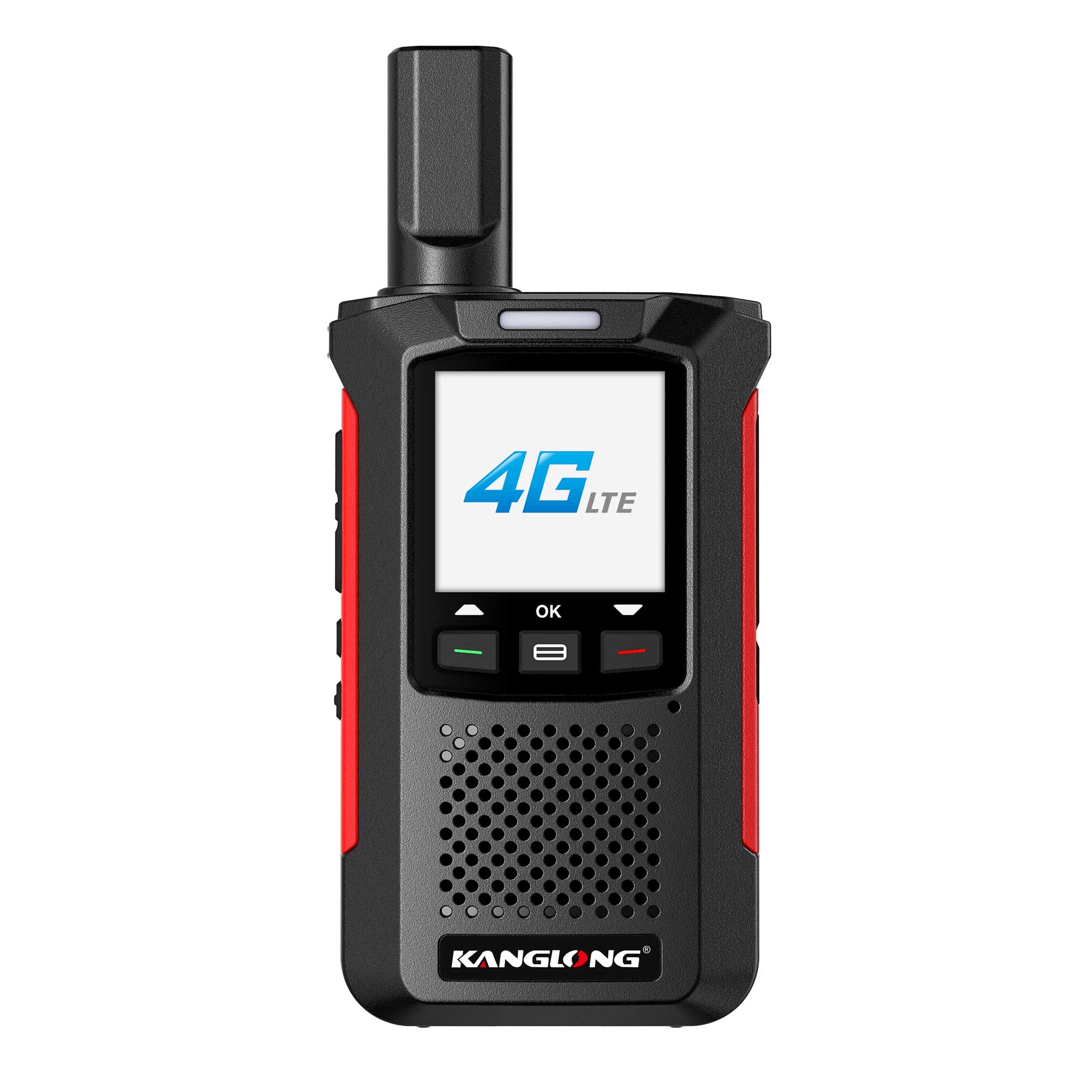
Upgrade your team's communication with the G-320 Wi-Fi PoC Radio—featuring a compact 1.44" display, real-time GPS tracking, and convenient USB Type-C charging to keep your workforce connected and safe without any downtime.
Read More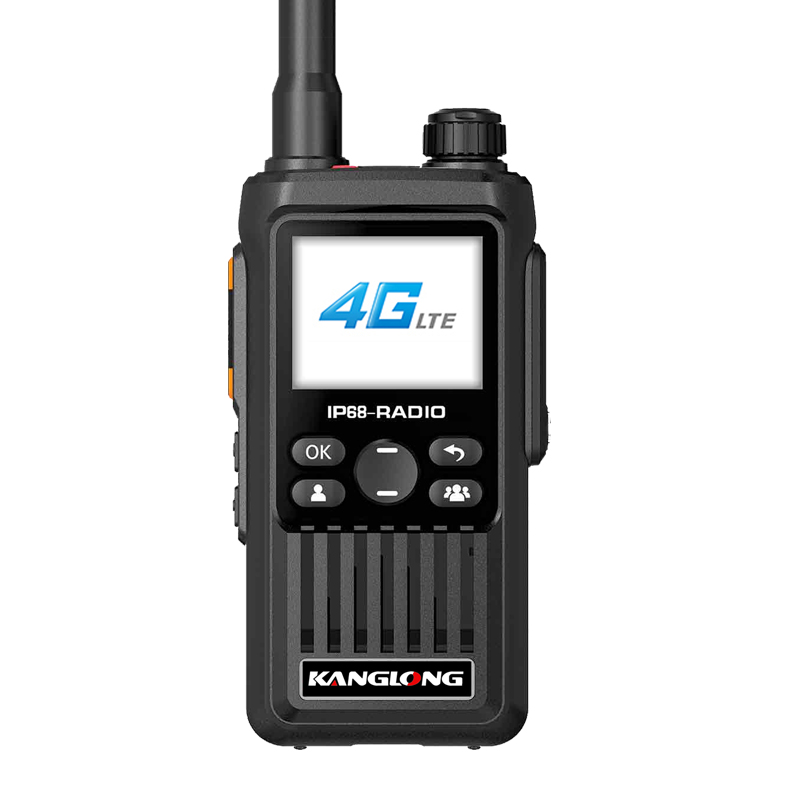
PG-55, IP68 waterproof 4G global walkie-talkie featuring dual SIM slots, optional GPS location tracking, and a dedicated SOS emergency button for nationwide, ultra-long-distance communication.
Read More