 English
 عربي
عربي Русский
 Français
 Español
 Deutsch
The KANGLONG DM-800 is a professional two-way radio featuring AES256 DMR encryption, 10W walkie talkie power, and same frequency relay radio technology in a rugged IP68 waterproof radio body.
Read More

Wireless Communication Solution for Modern Commercial Complexes
A Practical Case Study on Overcoming Signal Barriers, Channel Chaos, and Security Risks Using DM-5300 Repeaters and DM-800 Handheld Radios
Modern shopping centers represent one of the most challenging environments for radio frequency (RF) communications. Characterized by expansive multi-level floor plans, heavy concrete pillars, reinforced structural steel beams, and dense customer crowds, these architectural giants frequently suffer from extreme signal degradation. A wireless communication failure in such environments does not merely mean a dropped call; it directly translates into delayed customer service, security response gaps, warehouse logistical bottlenecks, and compromised safety protocols during operational emergencies.
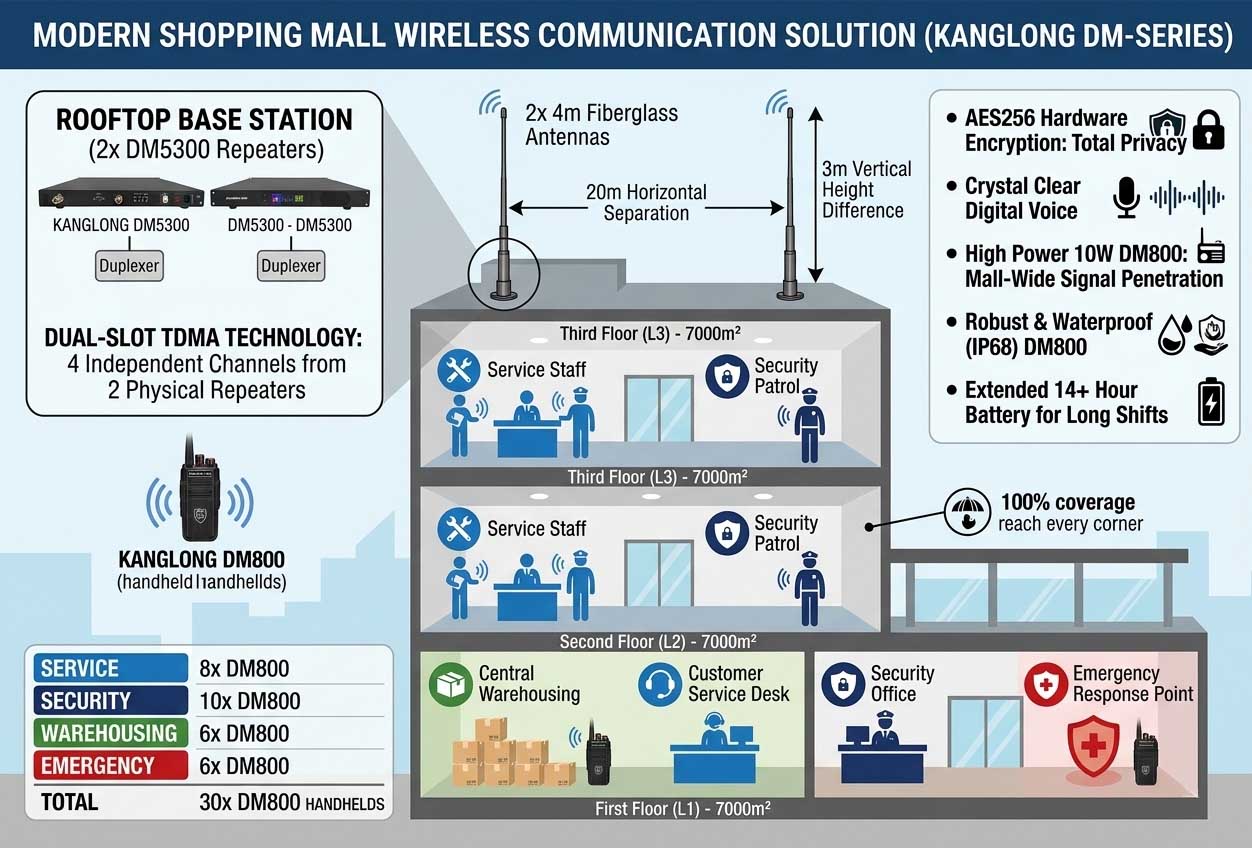
This case study evaluates the implementation of a comprehensive digital wireless communication system designed for a prominent multi-level shopping mall. The facility spans three expansive floors above ground with no basement levels. Each floor comprises an area of exactly 7,000 square meters, culminating in a total operational footprint of 21,000 square meters. The facility requires instantaneous, secure, and interference free voice and data coordination across four vital organizational departments: Customer Service, Security, Warehousing/Logistics, and Emergency Response.
Core Objective: To deploy an commercial-grade DMR (Digital Mobile Radio) wireless communication network that provides 100% signal coverage across all 21,000 square meters, establishes distinct non interfering channels for specialized teams, secures sensitive data via robust encryption, and withstands the physical rigors of daily retail operations.
Before upgrading the communication infrastructure, the shopping mall relied on basic, legacy analog walkie-talkies operating on direct simplex frequencies. As the facility scaled and tenant occupancy reached maximum capacity, several crippling operational pain points emerged:
2.1 Structural Signal Dead Zones
With 7,000 square meters per floor, the sheer horizontal distance from one end of the mall to the other was a massive barrier for standard low-power radios. Reinforced concrete walls, thick metallic architectural facade panels, and elevator shafts created severe attenuation. The warehousing staff located in the rear storage corridors completely lost contact with the front-of-house service staff. Security personnel patrolling the perimeter structure suffered from intermittent audio dropouts, rendering fast coordination during theft or safety incidents nearly impossible.
2.2 Severe Channel Congestion & Mutual Interference
With dozens of staff members sharing limited, unmanaged frequencies, the airwaves became chaotic. Customer service representatives trying to coordinate retail promotions were constantly interrupted by security teams handling crowd control or warehouse staff shouting stock counts. This continuous cross-talk led to communication fatigue, missed instructions, and an incredibly noisy environment that annoyed customers nearby.
2.3 Vulnerability to Eavesdropping & Malicious Breaches
The mall operates in a dense urban zone surrounded by other retail businesses, civilian traffic, and radio enthusiasts. Because the old analog system lacked any form of encryption, transmissions could easily be intercepted by inexpensive off-the-shelf scanners. Sensitive financial conversations—such as cash transfer schedules from retail tills to the central vault—and confidential emergency response protocols were exposed to the public, posing an unacceptable security risk.
2.4 Equipment Fragility & Short Battery Lifespans
Logistics and security staff operate in highly demanding physical environments. Handheld radios were frequently dropped onto concrete floors or exposed to water during facility cleaning. Cheap consumer-grade radios suffered cracked housings and broken belt clips regularly. Furthermore, during extended weekend shifts or holiday sales events, standard radio batteries died halfway through the day, forcing staff to leave their posts to retrieve replacements or chargers.
To eliminate these operational bottlenecks, KangLong engineers designed a centralized DMR Tier II digital relay infrastructure centered around the high-performance KangLong DM-5300 digital relay station and the ultra-rugged, 100-channel KangLong DM-800 handheld radio.
3.1 Roof-Top Relay Station Optimization
The core backbone of the network consists of two independent KangLong DM-5300 digital repeaters installed within a secure, climate-controlled equipment room located directly on the roof of the shopping center. Placing the repeaters at the highest structural elevation ensures an optimal line-of-sight path for RF energy to penetrate downward through the facility floor plates.
Each DM-5300 repeater is paired with an industrial-grade cavity duplexer. The duplexer allows the simultaneous transmission (TX) and reception (RX) of signals through a single antenna system without causing internal receiver desensitization. This eliminates the need for multiple clumsy antenna configurations per repeater, reducing overall structural footprint and minimizing wind load on the roof fixtures.
3.2 Antenna Isolation & Separation Physics
To operate two high-power repeaters simultaneously in close proximity without causing mutual desensitization or intermodulation distortion, the engineering team applied strict physical isolation principles. The system utilizes two high-gain, 4-meter fiberglass omnidirectional antennas. The physical deployment geometry was calculated precisely to maximize free-space path loss isolation between the two antenna structures:
By combining a 20-meter horizontal separation with a 3-meter vertical drop, the system achieves greater than 65dB of physical RF isolation. This physical separation prevents the high-power transmitter of Repeater 1 from overloading or blinding the sensitive receiver circuit of Repeater 2, ensuring both channels remain completely clear and functional even when transmitting simultaneously at full power.
The shopping mall requires four distinct operational channels, yet physical frequency spectrum is a scarce and regulated asset. To solve this problem without needing four separate physical frequencies, the solution leverages the Time Division Multiple Access (TDMA) dual-slot technology native to the KangLong DM-5300 and DM-800 platforms.
DMR TDMA technology divides a single 12.5kHz physical channel into two independent, alternating time slots (Slot 1 and Slot 2). Each time slot functions as an entirely separate communication pathway. Therefore, one physical DM-5300 repeater can manage two independent talk paths simultaneously. By deploying two DM-5300 repeaters, the mall gains exactly four distinct communication channels using only two licensed frequency pairs.
| Repeater Unit |
Physical Frequency Pair |
TDMA Time Slot |
Assigned Department |
Channel Function & Operational Scope |
|
Repeater 1 (DM-5300 #1) |
Pair A (e.g., TX: 460.125 MHz / RX: 465.125 MHz) |
Time Slot 1 |
Customer Service |
Floor staff, cashiers, information desk, and retail coordinators handling daily store requests. |
| Time Slot 2 | Security Team |
Loss prevention officers, perimeter patrols, cash-in-transit guards, and crowd monitoring. |
||
|
Repeater 2 (DM-5300 #2) |
Pair B (e.g., TX: 460.375 MHz / RX: 465.375 MHz) |
Time Slot 1 |
Warehousing & Logistics |
Back-of-house storage handlers, inventory clerks, loading dock supervisors, and forklift operators. |
| Time Slot 2 |
Emergency Response |
Crisis management, fire wardens, medical first responders, and senior mall directors. |
This channel mapping ensures that each department operates within its own dedicated virtual network. Security staff can manage a shoplifting incident on Channel 2 with absolute clarity, while warehouse staff coordinate heavy cargo deliveries on Channel 3. There is zero risk of overlapping audio or dropped words, eliminating the chaotic cross-talk that plagued the old analog system.
5.1 Punching Through Obstacles: 10W High-Power Penetration
Standard commercial handheld radios are typically limited to 4W or 5W of output power. In a vast 7,000 square meter open floor plan broken up by concrete walls and structural pillars, low-power signals degrade fast. The KangLong DM-800 handheld radio delivers an industry-leading 10W of RF output power. This boosted signal level provides the raw penetration required to push through heavy building materials, structural metal studs, and insulating layers. Whether an officer is buried deep inside a rear utility room or standing at the furthest corner of the parking structure, the 10W output guarantees a crisp signal back to the rooftop DM-5300 repeaters.
5.2 Complete Communication Privacy: Hardware-Level AES256 Encryption
To address the critical vulnerability of eavesdropping, the entire fleet of 30 DM-800 radios and both DM-5300 repeaters are configured with advanced hardware-based AES256 (Advanced Encryption Standard) encryption. AES256 utilizes a symmetric key length of 256 bits, generating a mathematically astronomical
number of combinations. Any voice or data packet transmitted over the air is completely scrambled before leaving the antenna. Even if a third party intercepts the digital data stream using an advanced SDR (Software Defined Radio) scanner, the audio will sound like completely unreadable digital noise. This ensures that sensitive mall business, financial transport logs, and critical emergency security deployments remain confidential.
5.3 Built for Tough Environments: IP68 Waterproof & Dustproof Construction
The KangLong DM-800 features an ultra-rugged housing rated to IP68 ingress protection standards. The first digit ("6") signifies complete protection against dust, dirt, and fine particles common in warehouse loading bays and maintenance corridors. The second digit ("8") guarantees that the radio can withstand complete submersion in water up to 1.5 meters deep for up to 30 minutes. If a warehouse worker drops the radio onto a wet loading dock during a heavy rainstorm, or if a service staff member accidentally knocks it into a cleaning bucket, the device can simply be wiped dry and put back into immediate service. This rugged build drastically slashes equipment repair and replacement costs.
5.4 Extended Shift Performance: High-Capacity Battery & Type-C Convenience
Retail environments require long hours, with staff shifts frequently extending up to 12 or 14 hours during peak holiday seasons. The DM-800 is built with power efficiency in mind, utilizing the AMBE3000++ vocoder and optimized digital power management. In digital mode, the DM-800 delivers an impressive operational battery life exceeding 14 hours on a single charge.
Furthermore, alongside standard desktop drop-in charging cradles, the DM-800 features an integrated, protected Type-C USB charging port directly on the side of the battery pack. This allows staff members to quickly charge their radios using standard smartphone chargers, vehicle power adapters, or portable power banks in the field, eliminating down-time caused by dead batteries.
The following tables outline the specific parameters extracted from the hardware data sheets utilized in this deployment to ensure strict compliance with RF standard regulations and structural safety:
6.1 KangLong DM-5300 Digital Repeater Base Station Parameters
| Parameter Item | Technical Operational Specification |
| Frequency Range Compatibility |
UHF: 400-430 MHz, 430-450 MHz, 450-490 MHz; VHF: 136-162 MHz, 148-174 MHz |
| Transmission Power Output |
UHF: 5W - 30W; VHF: 5W - 40W (Configured to 30W for continuous duty) |
| Channel Spacing / Capacity |
12.5kHz / 25kHz (Analog); 12.5kHz (Digital TDMA) | 55 Channels |
| Receiving Sensitivity |
Digital 1% error rate @ 12.5kHz: 0.35uV / Analog 12dB SINAD: 0.22uV |
| Adjacent Channel Selectivity | VHF: 83dB / 77dB; UHF: 80dB / 74dB |
| Working Power Supply & Voltage | AC: 100V - 220V Switching; DC: 13.6V Support |
| Physical Form Factor & Weight |
480mm × 44mm × 376mm (Standard 1U Rackmount) | 7.5kg |
6.2 KangLong DM-800 High-Power Handheld Radio Parameters
| Parameter Item | Technical Operational Specification |
| Frequency Capabilities | VHF: 136-174MHz / UHF: 400-480MHz |
| RF Transmission Power | UHF / VHF: High Power: 10W / Low Power: 5W |
| Channel & Zone Capacity |
1024 Channels / 64 Regional Capacity (Max 16 channels per region) |
| Digital Vocoder Type | AMBE 3000++ Hardware Vocoder Engine |
| Ingress Protection Rating |
IP68 Certified Water Submersion and Total Dust Isolation |
| Encryption Capability |
Advanced Hardware-based AES256 Secure Voice/Data Scrambling |
| Battery Performance Window Digital Mode: | >14 hours | Analog Mode: >10.5 hours |
| Display Panel Interface | 1.8-inch High-Definition TFT Liquid Crystal Color Screen |
The physical rollout of the system was executed over a single night to prevent any disruption to standard mall trading hours. Once the roof-top DM-5300 base repeaters were anchored, grounded against lightning strikes, and connected to the duplexers and isolated antennas, a series of rigorous walk-tests were conducted across every square meter of the facility.
7.1 Elimination of Audio Distortion
Thanks to the advanced AMBE3000++ vocoder and digital error correction algorithms built into the DMR framework, the system maintains clear audio across its entire coverage zone. Unlike old analog radios that get increasingly static-filled and noisy as you move further away, the digital signal remains crisp right up to the absolute edge of the coverage boundary. Background noise from bustling shopping crowds, ventilation fans, and parking garage traffic is completely filtered out, delivering clear voice communications to every department.
7.2 Seamless Penetration of Critical Zones
Field test engineers systematically mapped out known problematic locations: the deep service elevators, the thick concrete core stairs, and the dense shelving racks inside the back-of-house storage areas. Powered by the 10W transmission output of the DM-800 and the high-gain rooftop repeaters, signal testing returned perfect reception across all locations. Dead zones were entirely eliminated, creating a single, unbroken communication web over all 21,000 square meters.
7.3 Flawless Departmental Separation
During maximum operational load simulation, users across all four channels transmitted simultaneously. The TDMA dual-slot programming on the two DM-5300 base stations worked flawlessly. There was absolutely zero cross-talk bleed or channel drift. The security team successfully carried out sensitive operations without hearing any warehouse logistics updates, and the customer service desk remained quiet and professional.
By swapping out their aging analog equipment for a tailored KangLong DMR digital system, the shopping center solved its communication issues for good. The smart combination of two DM-5300 repeaters utilizing TDMA dual-slot technology allowed the mall to easily run four dedicated channels using just two physical frequencies. Physical antenna separation on the roof completely stopped mutual channel interference, while the 10W output power of the DM-800 handhelds eliminated every single dead zone across the 21,000 square
meter property.
Backed by strong AES256 hardware encryption and an ultra-tough IP68 waterproof design, the mall's staff is now equipped with a reliable, highly secure communication tool. This system ensures smooth daily operations, improves safety, and will easily support the business for years to much come.
Project Technical Provider: KangLong Electron. Tech. Co., Ltd.
Corporate Manufacturing Facility Address: 102, Bldg 11,23 Chuangzao Ave, Xiamei, Quanzhou, Fujian, 362302, CN
Official Enterprise Web Portal: www.kanglongradio.com
KangLong Electron. Tech. Co., Ltd. | DM-5300 & DM-800 Case Study
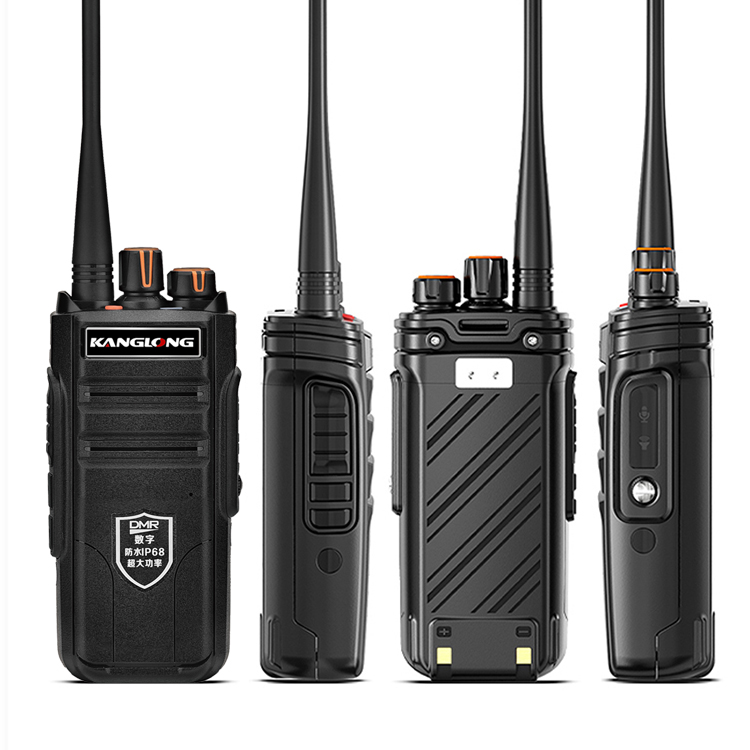
The KANGLONG DM-800 is a professional two-way radio featuring AES256 DMR encryption, 10W walkie talkie power, and same frequency relay radio technology in a rugged IP68 waterproof radio body.
Read More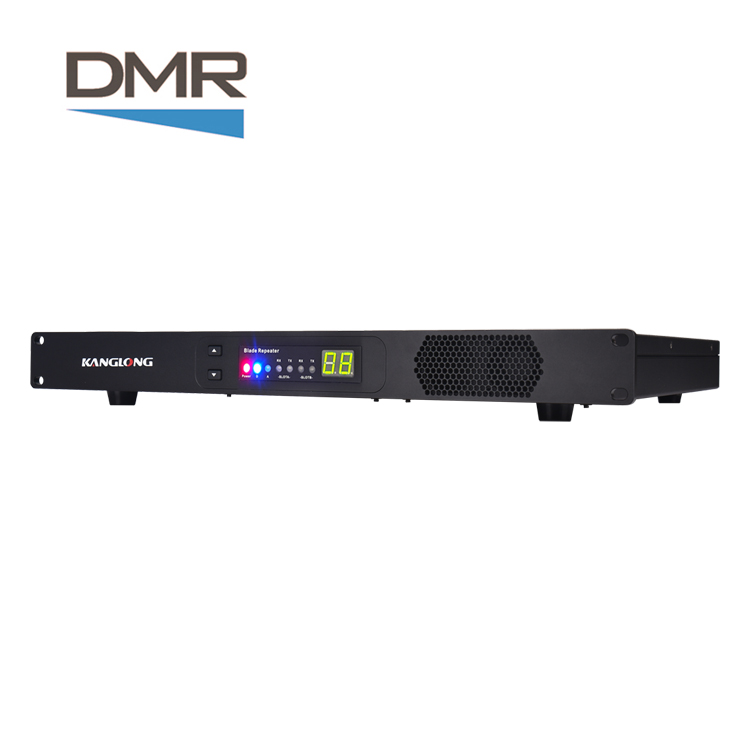
Maximize your communication range with the DM-5300 Digital Repeater, featuring 40W high power, TDMA dual time slot technology, and seamless hybrid analog/digital switching for professional radio networks.
Read More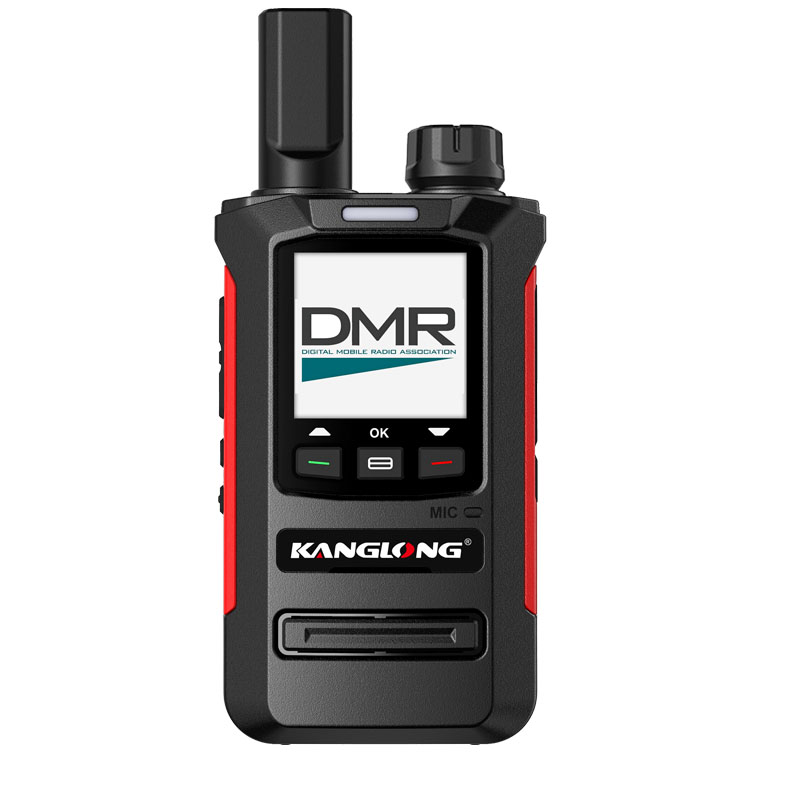
Ultra-compact and secure, the KANGLONG DM-390 combines professional AES256 digital encryption with a stylish 1.44" color display and Type-C charging, making it the ultimate high-performance communication tool for modern service and outdoor environments.
Read More