 English
 عربي
عربي Русский
 Français
 Español
 Deutsch
The D-7000 is a maintenance-free, solar-powered LoRa mesh repeater featuring a 20Ah high-capacity battery and 30-level signal jumping for permanent off-grid network coverage.
Read More

The Ghost in the Mountains: How We Cracked the "Communication Black Hole" During the 50-Day Shiguijie Search & Rescue
The Prelude: A Search That Haunted a Province
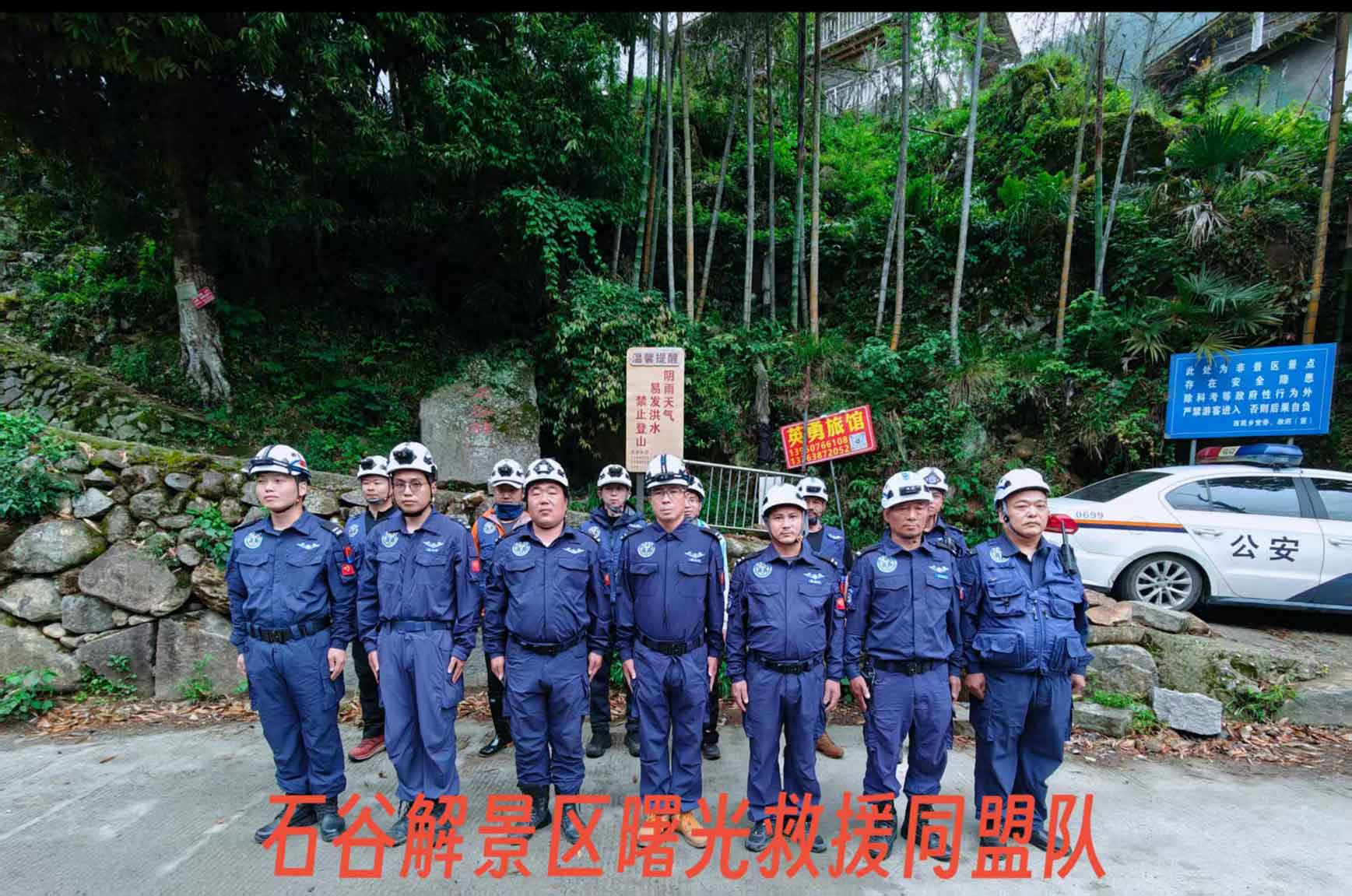
In May 2025, the serene peaks of Shiguijie in Fujian turned into a nightmare. An 8-year-old boy, Zou, vanished into thin air. For 50 days, over a thousand rescuers, volunteers, and tech experts combed through 1,500-meter elevations, navigating terrain that looked more like a prehistoric jungle than a modern hiking trail.
At KANGLONG RADIO, we didn't just watch the news. We packed our bags. We knew that in Shiguijie, the enemy wasn't just the distance—it was the silence. When you lose signal in a place like that, you lose hope. This is the story of how we used LoRa Ad-Hoc Mesh technology to turn a "Communication Black Hole" into a live tactical grid.
I. The Battlefield: Why Shiguijie Kills Standard Comms
To understand why we were there, you have to understand the "Wild Mountains." This isn't a park; it’s a vertical labyrinth of jagged granite, vine-choked ravines, and "blind valleys."
The "Zero-Bar" Trap: Standard cellular networks rely on Line-of-Sight (LoS) to base stations. In Shiguijie, the mountains act as giant lead shields. We saw rescuers walk 500 meters into a gorge, and their smartphones instantly became useless glass bricks. Command had no idea where they were, and they had no way to call for help if they twisted an ankle or encountered the local wildlife (snakes and wild boars are no joke here).
The Weather Tax: Fujian in May is a pressure cooker of humidity. One minute it’s 30°C, the next, a torrential downpour turns the soil into a mudslide. Then comes the fog—so thick it swallows your flashlight beam. High-end drones with thermal cameras? Useless. The moisture in the air scatters the infrared signal. We realized that voice and low-frequency data were the only things that could survive.
The Infrastructure Gap: There are no power lines. No fiber optics. Whatever we brought in had to be carried on our backs and powered by the sun or high-capacity batteries.
II. Tactical Deployment: The KANGLONG LoRa "Triple-Layer" Defense
We didn't just hand out walkie-talkies. We built a self-healing, living network. We used our LoRa (Long Range) Ad-Hoc Mesh system to create a "Point-Line-Plane" coverage map.
Layer 1: The "High Ground" (D7000 Solar Repeater)
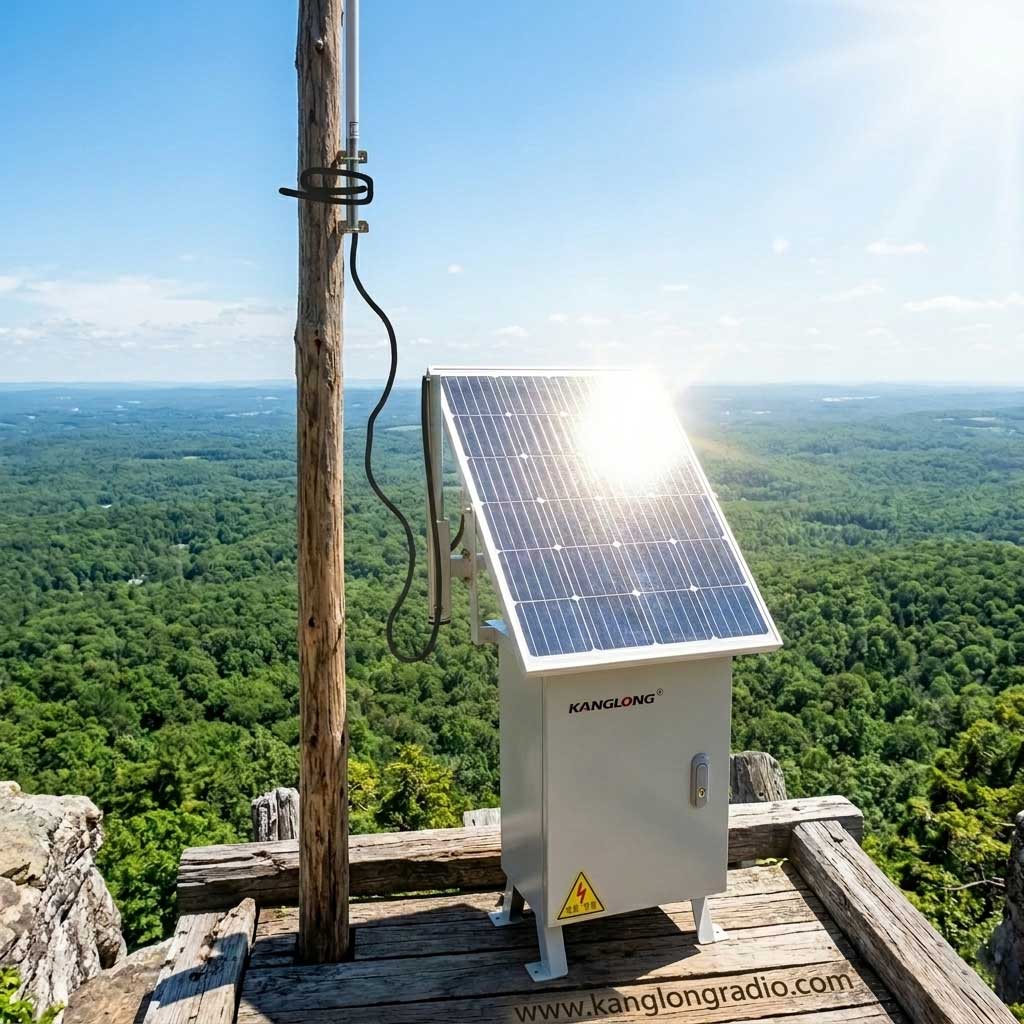
Our first move was the most grueling: sending a "peak team" to the highest ridge. They carried the D7000 Solar Repeater.
The Strategy: By placing the D7000 on the highest point, we created a wide-area umbrella.
The Tech: Because it’s solar-powered, we didn't have to worry about it dying at 2:00 AM. It acted as the "brain" of the operation, relaying signals from deep valleys back to the command center 10 kilometers away. It sat up there like a silent guardian, watching over every radio in the forest.
Layer 2: The "Bridge" (D6000R Portable Mesh Node)
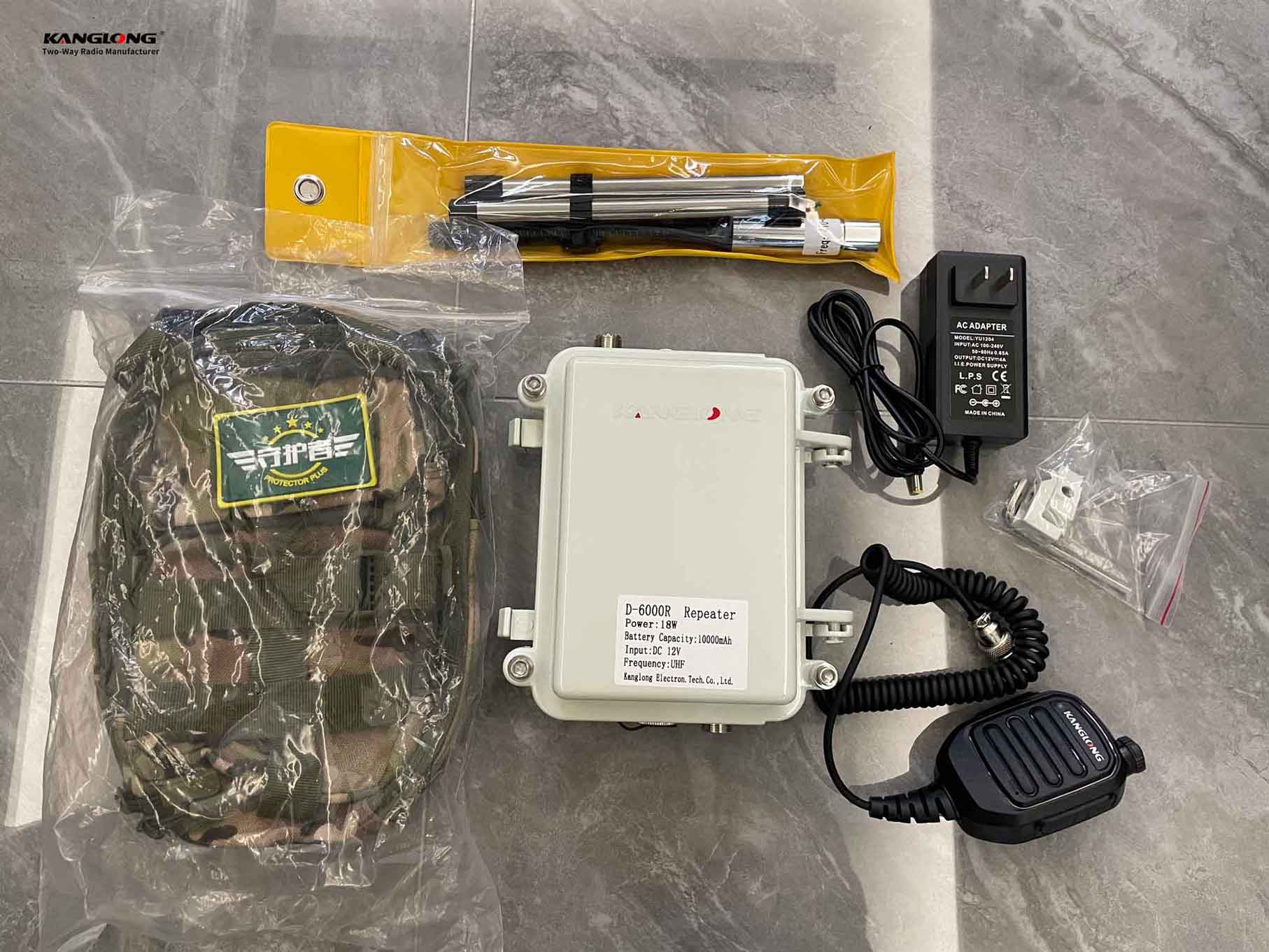
This is where the magic happens. As a team leader, I wore the D6000R on my tactical vest.
The Problem: Even with a mountain-top repeater, a deep enough canyon will still block a signal.
The Mesh Solution: The D6000R is a "moving node." If my scout went into a cave or a steep ravine where he couldn't "see" the mountain-top station, his radio would automatically talk to my backpack. My backpack would then "hop" his signal to the mountain top. It’s a relay race for data. We created a daisy-chain of signal that followed us as we moved.
Layer 3: The "Frontline Muscle" (D750 8W Handhelds)
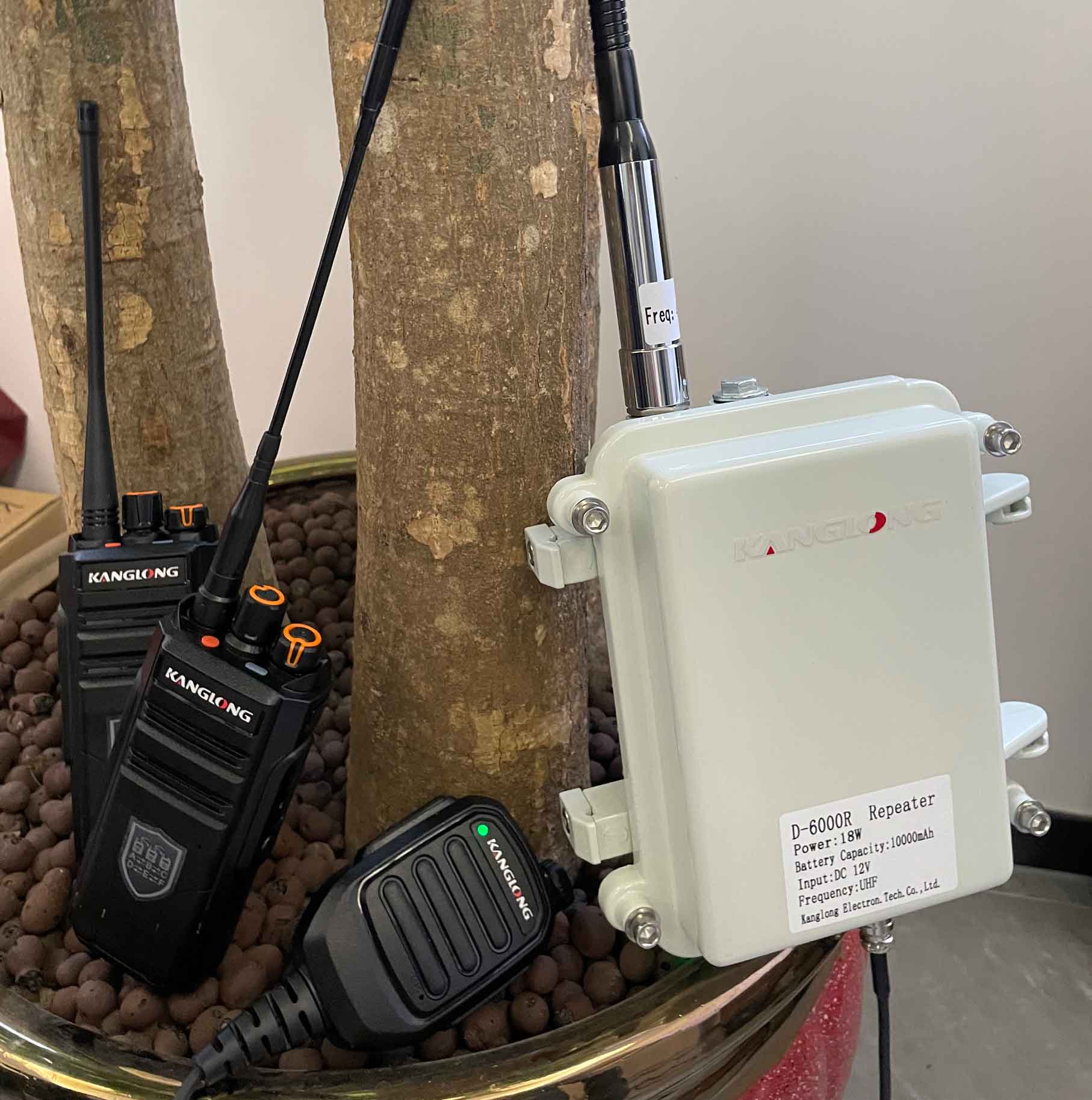
Every boots-on-the-ground rescuer was issued the D750.
Why 8 Watts? Most consumer radios are 2W or 5W. In dense wet foliage, 5W dies in a few hundred meters. The 8W output of the D750, combined with LoRa’s ultra-high sensitivity, meant our guys could talk through solid rock.
Durability: I watched a rescuer slip and drop his D750 into a mountain stream. He fished it out, wiped it on his shirt, and checked in with Command. The IP68 rating isn't a marketing gimmick—it’s a prerequisite for staying alive.
III. The "Logistics of Hope": Real-World Rescue Scenarios
Scenario A: The Deep Ravine Discovery
When the team finally pushed into the narrowest mountain stream—the site where the tragic discovery was eventually made—they were in a "dead zone." Usually, this would require a runner to hike 30 minutes uphill just to send a message.
With the KANGLONG Mesh, the scout simply keyed his mic.
"Command, this is Scout Alpha. We've found an item of interest. Need forensics and extraction at these GPS coordinates." The signal "hopped" from his D750 to a D6000R stationed 500 meters up the slope, which then beamed it to the D7000 on the peak, and finally into the Command Center's speakers. Total elapsed time: 0.5 seconds.
Scenario B: The Midnight Storm
One night, a flash storm hit. Teams were scattered. In the past, this was a recipe for disaster—rescuer disorientation. However, because our radios have built-in GPS and low-bandwidth data transmission, the Command Center could see the "dots" of every team on a digital map. We didn't have to ask "Where are you?" We already knew. We guided them to safety via voice, even when the fog made it impossible to see their own hands.
IV. Why LoRa Mesh is Revolutionizing Search & Rescue (SAR)
Standard radios (Analog/DMR) are like flashlights—if you can't see the other person, you can't talk. KANGLONG LoRa Mesh is like a campfire—the heat spreads and finds its way around corners.
Zero Infrastructure Dependency: We don't need a single cell tower. We are the cell tower. For emergency management departments, this means you can deploy in minutes, not hours.
The "Multi-Hop" Advantage: Our system supports multiple hops. This means you can string a "line of signal" through a 5-mile tunnel or a 10-mile mountain range just by dropping nodes as you go.
Low Frequency, High Penetration: LoRa operates on a frequency that loves to "bend" around obstacles. Where high-frequency 5G fails, LoRa thrives.
Cost-Effectiveness: Satellite phones cost $1,000+ and $1.00/minute, and they don't work under tree cover. Our system is a one-time investment that works in the thickest jungle on earth.
V. Reflection: More Than Just "Gadgets"
At the end of those 50 days, the atmosphere in Quanzhou was heavy. We didn't get the happy ending we all prayed for. But as a tech company, we learned something vital.
Communication isn't just about "talking." It’s about psychological security. When a searcher knows they can hit a button and hear a voice, they go further. They search harder. They take the risks necessary to find the lost because they know they aren't alone.
The Shiguijie Lessons:
Don't wait for the disaster to plan the comms.
"Wild Mountains" require "Wild Tech"—rugged, independent, and persistent.
The "Last Mile" is the most important mile.
Closing Statement
At KANGLONG RADIO, our mission is simple: No more silence. We build tools for the heroes who walk into the places everyone else is running away from. Whether it’s a forest fire in Sichuan, a tunnel collapse in Europe, or a missing person in the mountains of Fujian, we provide the link.
Because every life is worth the search, and every searcher deserves to be heard.
Get in Touch:
If your rescue team, mining operation, or industrial site needs a "Zero-Failure" communication grid, let’s talk.
Company: KANGLONG RADIO
Location: Quanzhou, China
Expertise: LoRa Mesh, Ad-Hoc Networking, Extreme Environment Comms
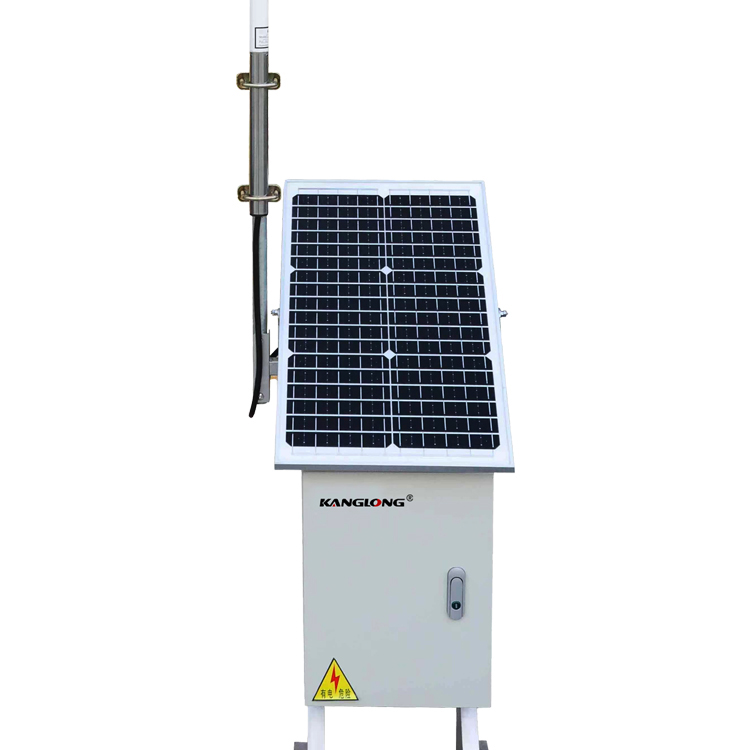
The D-7000 is a maintenance-free, solar-powered LoRa mesh repeater featuring a 20Ah high-capacity battery and 30-level signal jumping for permanent off-grid network coverage.
Read More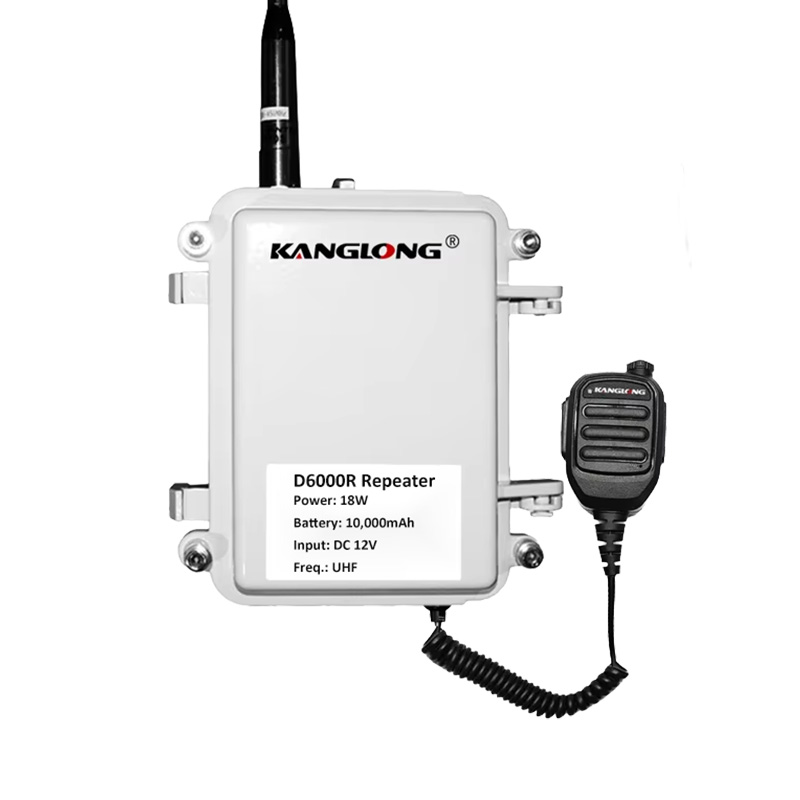
The D6000R is a market-leading 18W portable mesh repeater set with a 10,000mAh battery and 30-hop auto-mesh technology, designed for high-performance emergency rescue and search missions.
Read More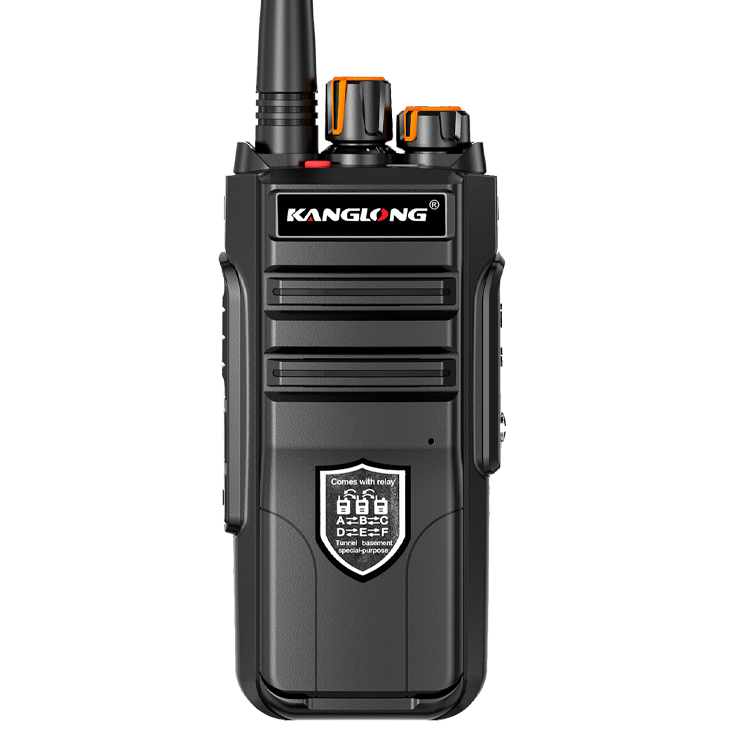
The D-750 Ad-hoc Mesh Radio features a 30-level continuous jump transfer function to extend communication range, providing a reliable 8W high-power signal and IP68 waterproof protection for seamless connectivity in complex tunnel or basement environments.
Read More